หน้า 1
คลิกเพื่อขยาย
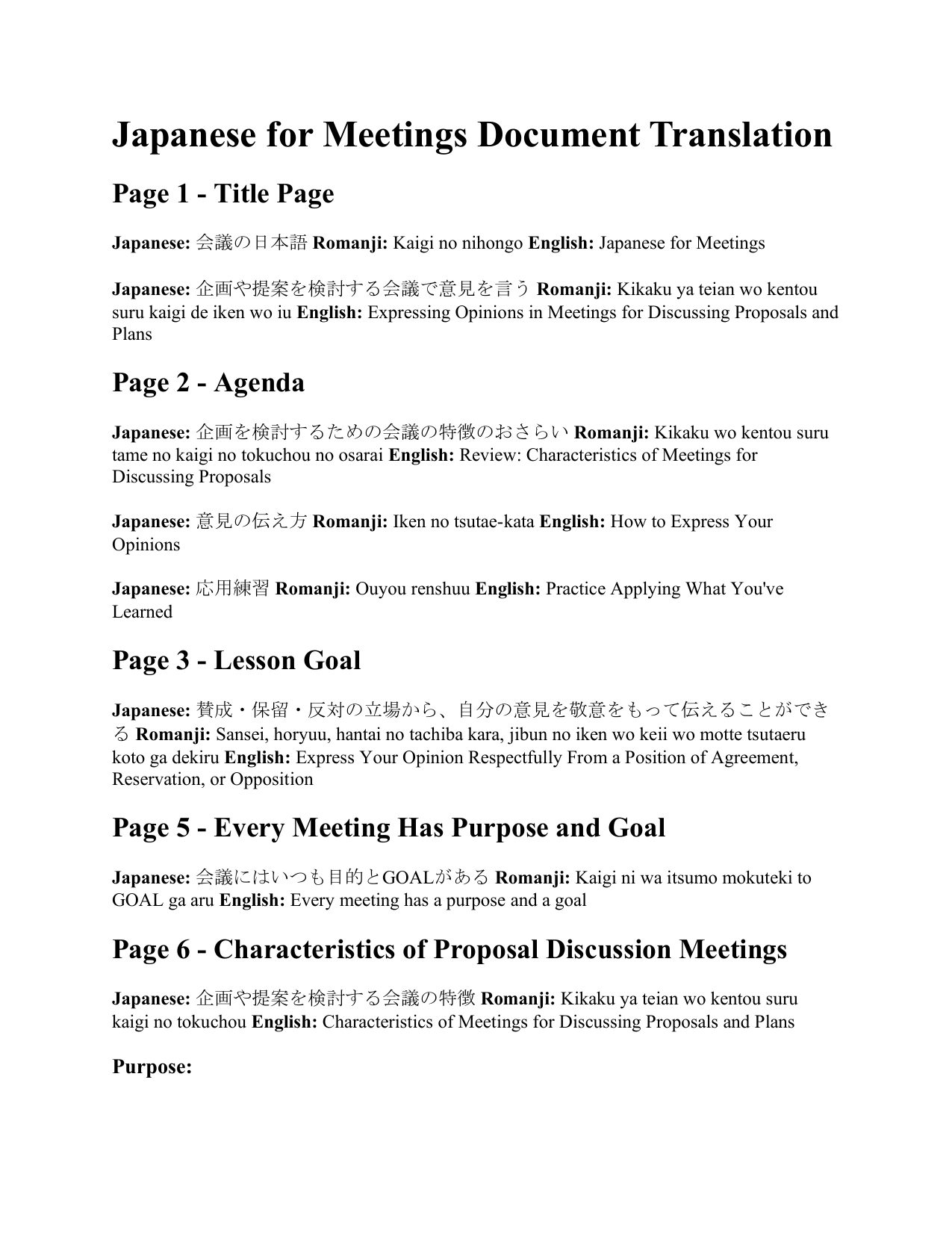
ENJapanese for Meetings Document Translation
Page 1 - Title Page
Japanese: 会議の日本語 Romanji: Kaigi no nihongo English: Japanese for Meetings
Japanese: 企画や提案を検討する会議で意見を言う Romanji: Kikaku ya teian wo kentou
suru kaigi de iken wo iu English: Expressing Opinions in Meetings for Discussing Proposals and
Plans
Page 2 - Agenda
Japanese: 企画を検討するための会議の特徴のおさらい Romanji: Kikaku wo kentou suru
tame no kaigi no tokuchou no osarai English: Review: Characteristics of Meetings for
Discussing Proposals
Japanese: 意見の伝え方 Romanji: Iken no tsutae-kata English: How to Express Your
Opinions
Japanese: 応用練習 Romanji: Ouyou renshuu English: Practice Applying What You've
Learned
Page 3 - Lesson Goal
Page 1 - Title Page
Japanese: 会議の日本語 Romanji: Kaigi no nihongo English: Japanese for Meetings
Japanese: 企画や提案を検討する会議で意見を言う Romanji: Kikaku ya teian wo kentou
suru kaigi de iken wo iu English: Expressing Opinions in Meetings for Discussing Proposals and
Plans
Page 2 - Agenda
Japanese: 企画を検討するための会議の特徴のおさらい Romanji: Kikaku wo kentou suru
tame no kaigi no tokuchou no osarai English: Review: Characteristics of Meetings for
Discussing Proposals
Japanese: 意見の伝え方 Romanji: Iken no tsutae-kata English: How to Express Your
Opinions
Japanese: 応用練習 Romanji: Ouyou renshuu English: Practice Applying What You've
Learned
Page 3 - Lesson Goal
JPJapanese:賛成・保留・反対の立場から、自分の意見を敬意をもって伝えることができ
ENる Romanji: Sansei, horyuu, hantai no tachiba kara, jibun no iken wo keii wo motte tsutaeru
koto ga dekiru English: Express Your Opinion Respectfully From a Position of Agreement,
Reservation, or Opposition
Page 5 - Every Meeting Has Purpose and Goal
Japanese: 会議にはいつも目的とGOALがある Romanji: Kaigi ni wa itsumo mokuteki to
GOAL ga aru English: Every meeting has a purpose and a goal
Page 6 - Characteristics of Proposal Discussion Meetings
Japanese: 企画や提案を検討する会議の特徴 Romanji: Kikaku ya teian wo kentou suru
kaigi no tokuchou English: Characteristics of Meetings for Discussing Proposals and Plans
Purpose:
koto ga dekiru English: Express Your Opinion Respectfully From a Position of Agreement,
Reservation, or Opposition
Page 5 - Every Meeting Has Purpose and Goal
Japanese: 会議にはいつも目的とGOALがある Romanji: Kaigi ni wa itsumo mokuteki to
GOAL ga aru English: Every meeting has a purpose and a goal
Page 6 - Characteristics of Proposal Discussion Meetings
Japanese: 企画や提案を検討する会議の特徴 Romanji: Kikaku ya teian wo kentou suru
kaigi no tokuchou English: Characteristics of Meetings for Discussing Proposals and Plans
Purpose:
หน้า 2
คลิกเพื่อขยาย
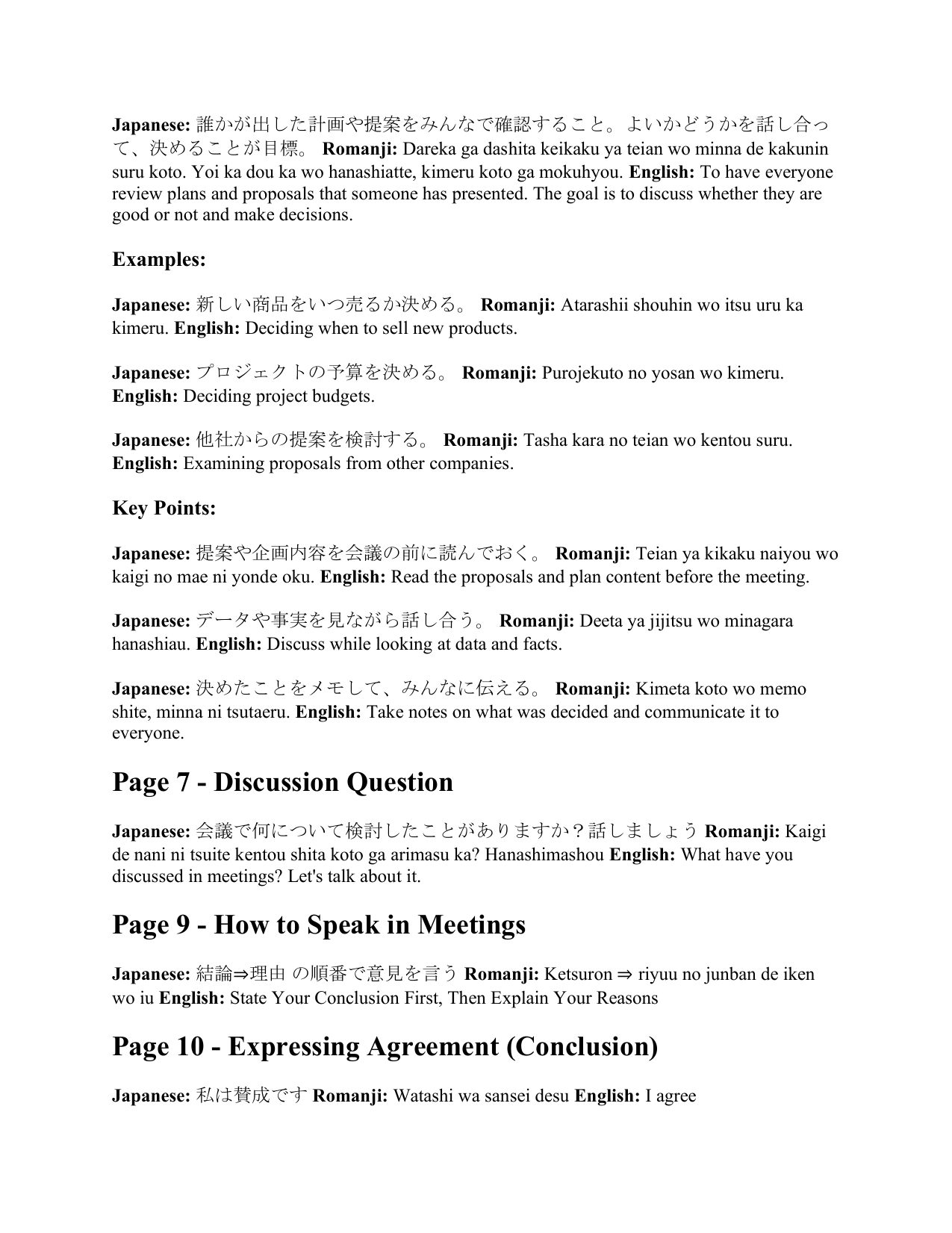
JPJapanese:誰かが出した計画や提案をみんなで確認すること。よいかどうかを話し合っ
ENて、決めることが目標。 Romanji: Dareka ga dashita keikaku ya teian wo minna de kakunin
suru koto. Yoi ka dou ka wo hanashiatte, kimeru koto ga mokuhyou. English: To have everyone
review plans and proposals that someone has presented. The goal is to discuss whether they are
good or not and make decisions.
Examples:
Japanese: 新しい商品をいつ売るか決める。 Romanji: Atarashii shouhin wo itsu uru ka
kimeru. English: Deciding when to sell new products.
Japanese: プロジェクトの予算を決める。 Romanji: Purojekuto no yosan wo kimeru.
English: Deciding project budgets.
Japanese: 他社からの提案を検討する。 Romanji: Tasha kara no teian wo kentou suru.
English: Examining proposals from other companies.
Key Points:
Japanese: 提案や企画内容を会議の前に読んでおく。 Romanji: Teian ya kikaku naiyou wo
kaigi no mae ni yonde oku. English: Read the proposals and plan content before the meeting.
Japanese: データや事実を見ながら話し合う。 Romanji: Deeta ya jijitsu wo minagara
hanashiau. English: Discuss while looking at data and facts.
Japanese: 決めたことをメモして、みんなに伝える。 Romanji: Kimeta koto wo memo
shite, minna ni tsutaeru. English: Take notes on what was decided and communicate it to
everyone.
Page 7 - Discussion Question
suru koto. Yoi ka dou ka wo hanashiatte, kimeru koto ga mokuhyou. English: To have everyone
review plans and proposals that someone has presented. The goal is to discuss whether they are
good or not and make decisions.
Examples:
Japanese: 新しい商品をいつ売るか決める。 Romanji: Atarashii shouhin wo itsu uru ka
kimeru. English: Deciding when to sell new products.
Japanese: プロジェクトの予算を決める。 Romanji: Purojekuto no yosan wo kimeru.
English: Deciding project budgets.
Japanese: 他社からの提案を検討する。 Romanji: Tasha kara no teian wo kentou suru.
English: Examining proposals from other companies.
Key Points:
Japanese: 提案や企画内容を会議の前に読んでおく。 Romanji: Teian ya kikaku naiyou wo
kaigi no mae ni yonde oku. English: Read the proposals and plan content before the meeting.
Japanese: データや事実を見ながら話し合う。 Romanji: Deeta ya jijitsu wo minagara
hanashiau. English: Discuss while looking at data and facts.
Japanese: 決めたことをメモして、みんなに伝える。 Romanji: Kimeta koto wo memo
shite, minna ni tsutaeru. English: Take notes on what was decided and communicate it to
everyone.
Page 7 - Discussion Question
JPJapanese:会議で何について検討したことがありますか?話しましょうRomanji:Kaigi
ENde nani ni tsuite kentou shita koto ga arimasu ka? Hanashimashou English: What have you
discussed in meetings? Let's talk about it.
Page 9 - How to Speak in Meetings
Japanese: 結論⇒理由 の順番で意見を言う Romanji: Ketsuron ⇒ riyuu no junban de iken
wo iu English: State Your Conclusion First, Then Explain Your Reasons
Page 10 - Expressing Agreement (Conclusion)
Japanese: 私は賛成です Romanji: Watashi wa sansei desu English: I agree
discussed in meetings? Let's talk about it.
Page 9 - How to Speak in Meetings
Japanese: 結論⇒理由 の順番で意見を言う Romanji: Ketsuron ⇒ riyuu no junban de iken
wo iu English: State Your Conclusion First, Then Explain Your Reasons
Page 10 - Expressing Agreement (Conclusion)
Japanese: 私は賛成です Romanji: Watashi wa sansei desu English: I agree
หน้า 3
คลิกเพื่อขยาย
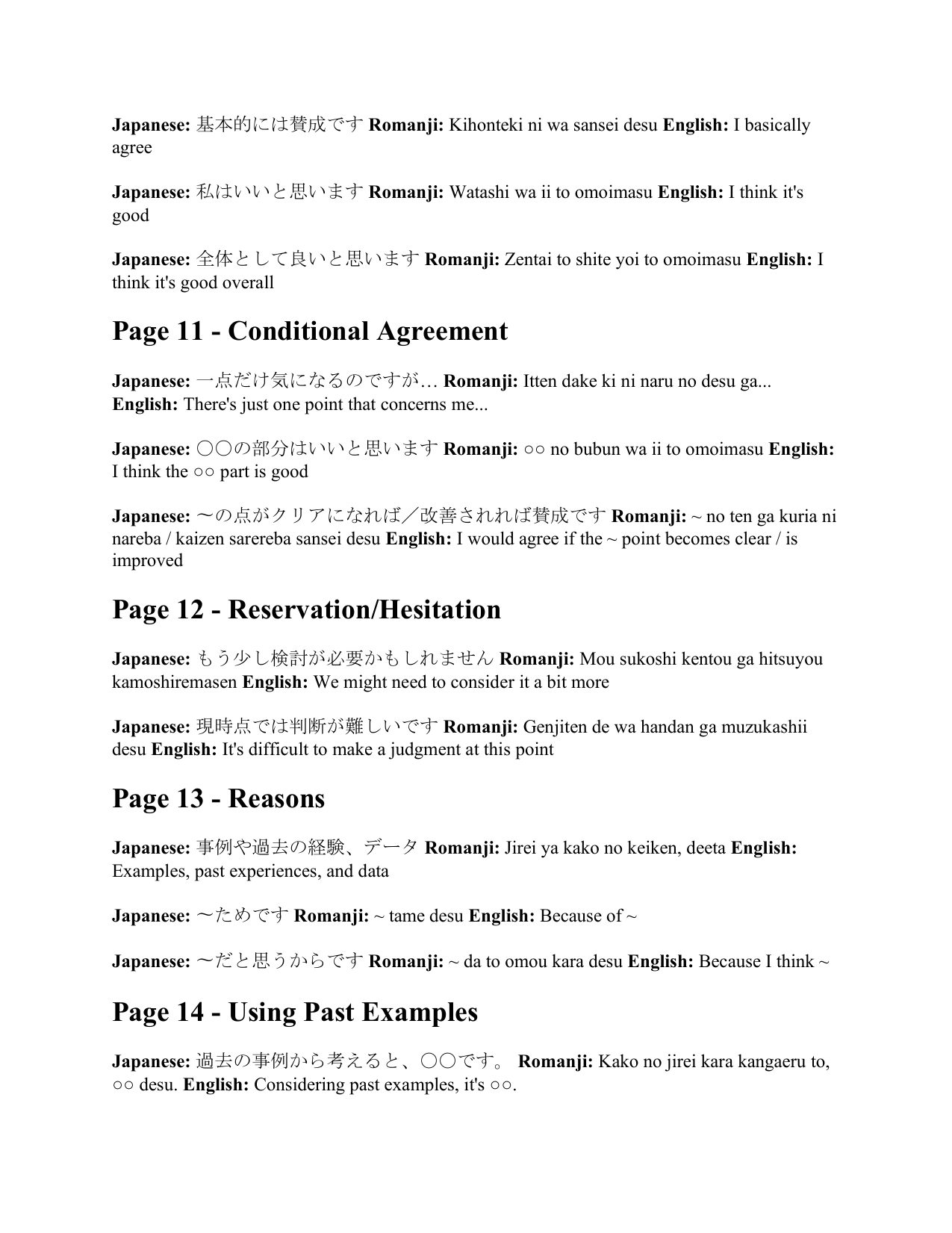
ENJapanese: 基本的には賛成です Romanji: Kihonteki ni wa sansei desu English: I basically
agree
Japanese: 私はいいと思います Romanji: Watashi wa ii to omoimasu English: I think it's
good
Japanese: 全体として良いと思います Romanji: Zentai to shite yoi to omoimasu English: I
think it's good overall
Page 11 - Conditional Agreement
Japanese: 一点だけ気になるのですが… Romanji: Itten dake ki ni naru no desu ga...
English: There's just one point that concerns me...
Japanese: 〇〇の部分はいいと思います Romanji: ○○ no bubun wa ii to omoimasu English:
I think the ○○ part is good
Japanese: 〜の点がクリアになれば/改善されれば賛成です Romanji: ~ no ten ga kuria ni
nareba / kaizen sarereba sansei desu English: I would agree if the ~ point becomes clear / is
improved
Page 12 - Reservation/Hesitation
Japanese: もう少し検討が必要かもしれません Romanji: Mou sukoshi kentou ga hitsuyou
kamoshiremasen English: We might need to consider it a bit more
Japanese: 現時点では判断が難しいです Romanji: Genjiten de wa handan ga muzukashii
desu English: It's difficult to make a judgment at this point
Page 13 - Reasons
Japanese: 事例や過去の経験、データ Romanji: Jirei ya kako no keiken, deeta English:
Examples, past experiences, and data
Japanese: 〜ためです Romanji: ~ tame desu English: Because of ~
Japanese: 〜だと思うからです Romanji: ~ da to omou kara desu English: Because I think ~
Page 14 - Using Past Examples
Japanese: 過去の事例から考えると、〇〇です。 Romanji: Kako no jirei kara kangaeru to,
○○ desu. English: Considering past examples, it's ○○.
agree
Japanese: 私はいいと思います Romanji: Watashi wa ii to omoimasu English: I think it's
good
Japanese: 全体として良いと思います Romanji: Zentai to shite yoi to omoimasu English: I
think it's good overall
Page 11 - Conditional Agreement
Japanese: 一点だけ気になるのですが… Romanji: Itten dake ki ni naru no desu ga...
English: There's just one point that concerns me...
Japanese: 〇〇の部分はいいと思います Romanji: ○○ no bubun wa ii to omoimasu English:
I think the ○○ part is good
Japanese: 〜の点がクリアになれば/改善されれば賛成です Romanji: ~ no ten ga kuria ni
nareba / kaizen sarereba sansei desu English: I would agree if the ~ point becomes clear / is
improved
Page 12 - Reservation/Hesitation
Japanese: もう少し検討が必要かもしれません Romanji: Mou sukoshi kentou ga hitsuyou
kamoshiremasen English: We might need to consider it a bit more
Japanese: 現時点では判断が難しいです Romanji: Genjiten de wa handan ga muzukashii
desu English: It's difficult to make a judgment at this point
Page 13 - Reasons
Japanese: 事例や過去の経験、データ Romanji: Jirei ya kako no keiken, deeta English:
Examples, past experiences, and data
Japanese: 〜ためです Romanji: ~ tame desu English: Because of ~
Japanese: 〜だと思うからです Romanji: ~ da to omou kara desu English: Because I think ~
Page 14 - Using Past Examples
Japanese: 過去の事例から考えると、〇〇です。 Romanji: Kako no jirei kara kangaeru to,
○○ desu. English: Considering past examples, it's ○○.
หน้า 4
คลิกเพื่อขยาย
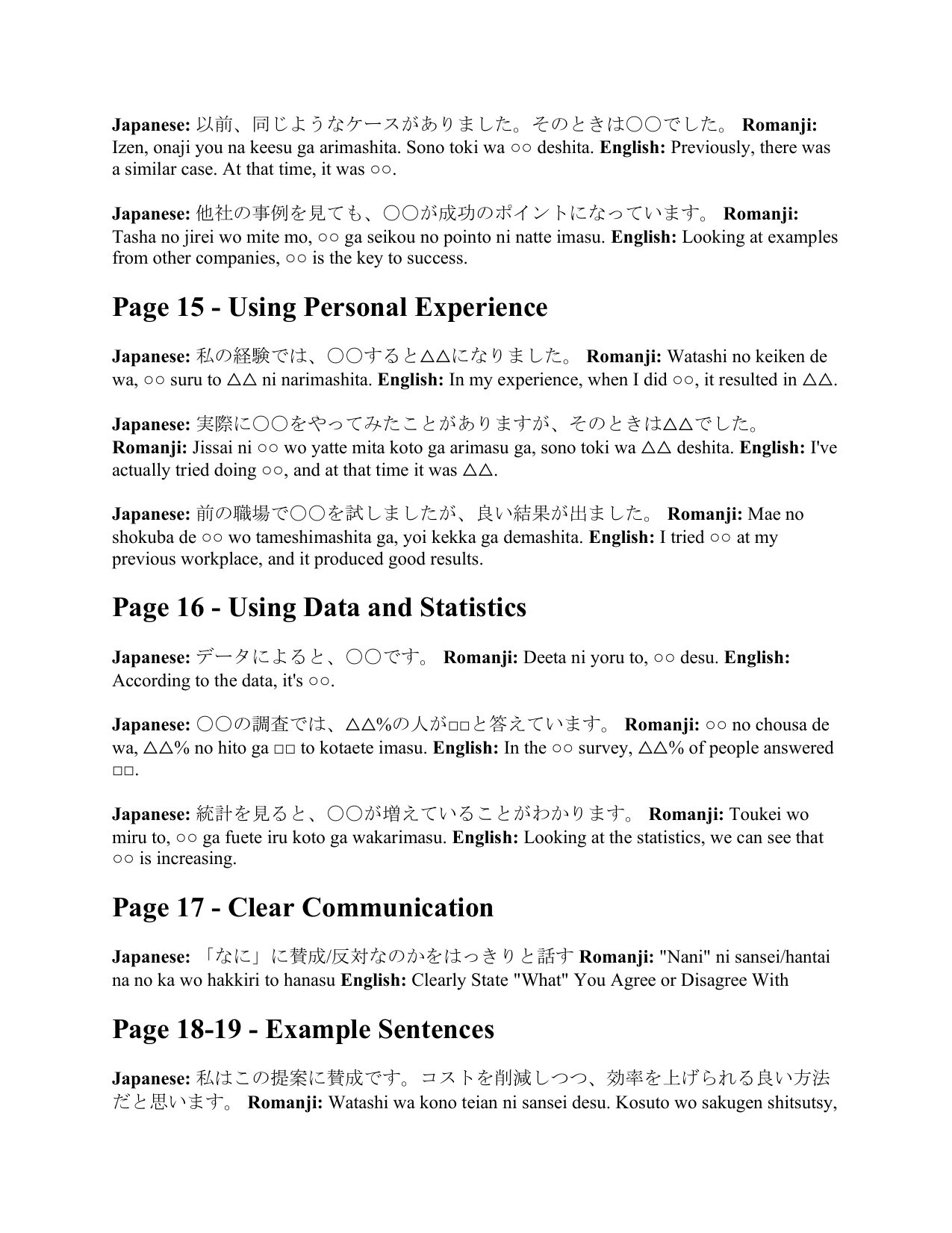
JPJapanese:以前、同じようなケースがありました。そのときは〇〇でした。Romanji:
ENIzen, onaji you na keesu ga arimashita. Sono toki wa ○○ deshita. English: Previously, there was
a similar case. At that time, it was ○○.
a similar case. At that time, it was ○○.
JPJapanese:他社の事例を見ても、〇〇が成功のポイントになっています。Romanji:
ENTasha no jirei wo mite mo, ○○ ga seikou no pointo ni natte imasu. English: Looking at examples
from other companies, ○○ is the key to success.
Page 15 - Using Personal Experience
Japanese: 私の経験では、〇〇すると△△になりました。 Romanji: Watashi no keiken de
wa, ○○ suru to △△ ni narimashita. English: In my experience, when I did ○○, it resulted in △△.
from other companies, ○○ is the key to success.
Page 15 - Using Personal Experience
Japanese: 私の経験では、〇〇すると△△になりました。 Romanji: Watashi no keiken de
wa, ○○ suru to △△ ni narimashita. English: In my experience, when I did ○○, it resulted in △△.
JPJapanese:実際に〇〇をやってみたことがありますが、そのときは△△でした。
ENRomanji: Jissai ni ○○ wo yatte mita koto ga arimasu ga, sono toki wa △△ deshita. English: I've
actually tried doing ○○, and at that time it was △△.
actually tried doing ○○, and at that time it was △△.
JPJapanese:前の職場で〇〇を試しましたが、良い結果が出ました。Romanji:Maeno
ENshokuba de ○○ wo tameshimashita ga, yoi kekka ga demashita. English: I tried ○○ at my
previous workplace, and it produced good results.
Page 16 - Using Data and Statistics
Japanese: データによると、〇〇です。 Romanji: Deeta ni yoru to, ○○ desu. English:
According to the data, it's ○○.
Japanese: 〇〇の調査では、△△%の人が□□と答えています。 Romanji: ○○ no chousa de
wa, △△% no hito ga □□ to kotaete imasu. English: In the ○○ survey, △△% of people answered
□□.
Japanese: 統計を見ると、〇〇が増えていることがわかります。 Romanji: Toukei wo
miru to, ○○ ga fuete iru koto ga wakarimasu. English: Looking at the statistics, we can see that
○○ is increasing.
Page 17 - Clear Communication
Japanese: 「なに」に賛成/反対なのかをはっきりと話す Romanji: "Nani" ni sansei/hantai
na no ka wo hakkiri to hanasu English: Clearly State "What" You Agree or Disagree With
Page 18-19 - Example Sentences
previous workplace, and it produced good results.
Page 16 - Using Data and Statistics
Japanese: データによると、〇〇です。 Romanji: Deeta ni yoru to, ○○ desu. English:
According to the data, it's ○○.
Japanese: 〇〇の調査では、△△%の人が□□と答えています。 Romanji: ○○ no chousa de
wa, △△% no hito ga □□ to kotaete imasu. English: In the ○○ survey, △△% of people answered
□□.
Japanese: 統計を見ると、〇〇が増えていることがわかります。 Romanji: Toukei wo
miru to, ○○ ga fuete iru koto ga wakarimasu. English: Looking at the statistics, we can see that
○○ is increasing.
Page 17 - Clear Communication
Japanese: 「なに」に賛成/反対なのかをはっきりと話す Romanji: "Nani" ni sansei/hantai
na no ka wo hakkiri to hanasu English: Clearly State "What" You Agree or Disagree With
Page 18-19 - Example Sentences
JPJapanese:私はこの提案に賛成です。コストを削減しつつ、効率を上げられる良い方法
ENだと思います。 Romanji: Watashi wa kono teian ni sansei desu. Kosuto wo sakugen shitsutsу,
หน้า 5
คลิกเพื่อขยาย
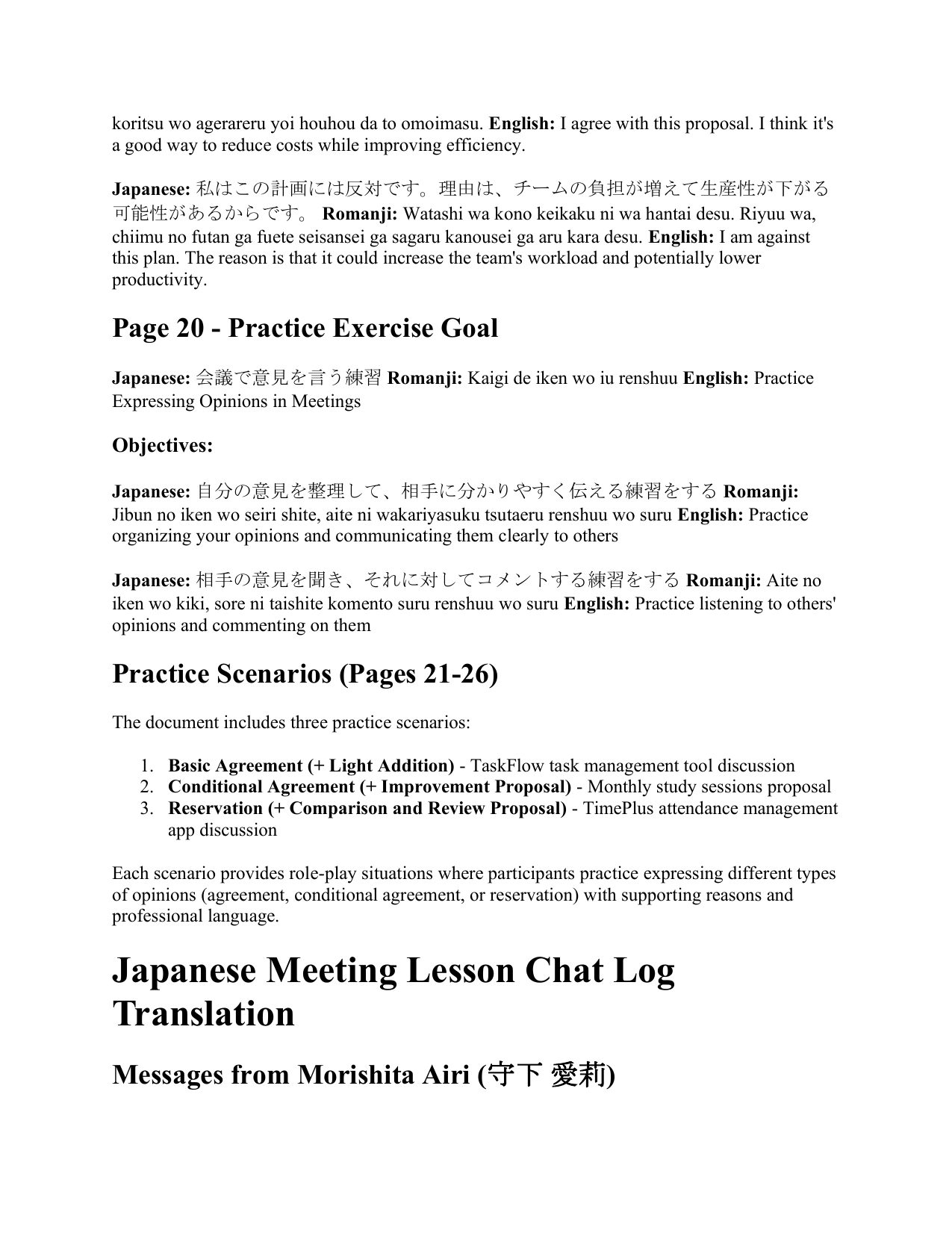
ENkoritsu wo agerareru yoi houhou da to omoimasu. English: I agree with this proposal. I think it's
a good way to reduce costs while improving efficiency.
a good way to reduce costs while improving efficiency.
JPJapanese:私はこの計画には反対です。理由は、チームの負担が増えて生産性が下がる
EN可能性があるからです。 Romanji: Watashi wa kono keikaku ni wa hantai desu. Riyuu wa,
chiimu no futan ga fuete seisansei ga sagaru kanousei ga aru kara desu. English: I am against
this plan. The reason is that it could increase the team's workload and potentially lower
productivity.
Page 20 - Practice Exercise Goal
Japanese: 会議で意見を言う練習 Romanji: Kaigi de iken wo iu renshuu English: Practice
Expressing Opinions in Meetings
Objectives:
chiimu no futan ga fuete seisansei ga sagaru kanousei ga aru kara desu. English: I am against
this plan. The reason is that it could increase the team's workload and potentially lower
productivity.
Page 20 - Practice Exercise Goal
Japanese: 会議で意見を言う練習 Romanji: Kaigi de iken wo iu renshuu English: Practice
Expressing Opinions in Meetings
Objectives:
JPJapanese:自分の意見を整理して、相手に分かりやすく伝える練習をするRomanji:
ENJibun no iken wo seiri shite, aite ni wakariyasuku tsutaeru renshuu wo suru English: Practice
organizing your opinions and communicating them clearly to others
organizing your opinions and communicating them clearly to others
JPJapanese:相手の意見を聞き、それに対してコメントする練習をするRomanji:Aiteno
ENiken wo kiki, sore ni taishite komento suru renshuu wo suru English: Practice listening to others'
opinions and commenting on them
Practice Scenarios (Pages 21-26)
The document includes three practice scenarios:
1. Basic Agreement (+ Light Addition) - TaskFlow task management tool discussion
2. Conditional Agreement (+ Improvement Proposal) - Monthly study sessions proposal
3. Reservation (+ Comparison and Review Proposal) - TimePlus attendance management
app discussion
Each scenario provides role-play situations where participants practice expressing different types
of opinions (agreement, conditional agreement, or reservation) with supporting reasons and
professional language.
Japanese Meeting Lesson Chat Log
Translation
Messages from Morishita Airi (守下 愛莉)
opinions and commenting on them
Practice Scenarios (Pages 21-26)
The document includes three practice scenarios:
1. Basic Agreement (+ Light Addition) - TaskFlow task management tool discussion
2. Conditional Agreement (+ Improvement Proposal) - Monthly study sessions proposal
3. Reservation (+ Comparison and Review Proposal) - TimePlus attendance management
app discussion
Each scenario provides role-play situations where participants practice expressing different types
of opinions (agreement, conditional agreement, or reservation) with supporting reasons and
professional language.
Japanese Meeting Lesson Chat Log
Translation
Messages from Morishita Airi (守下 愛莉)
หน้า 6
คลิกเพื่อขยาย
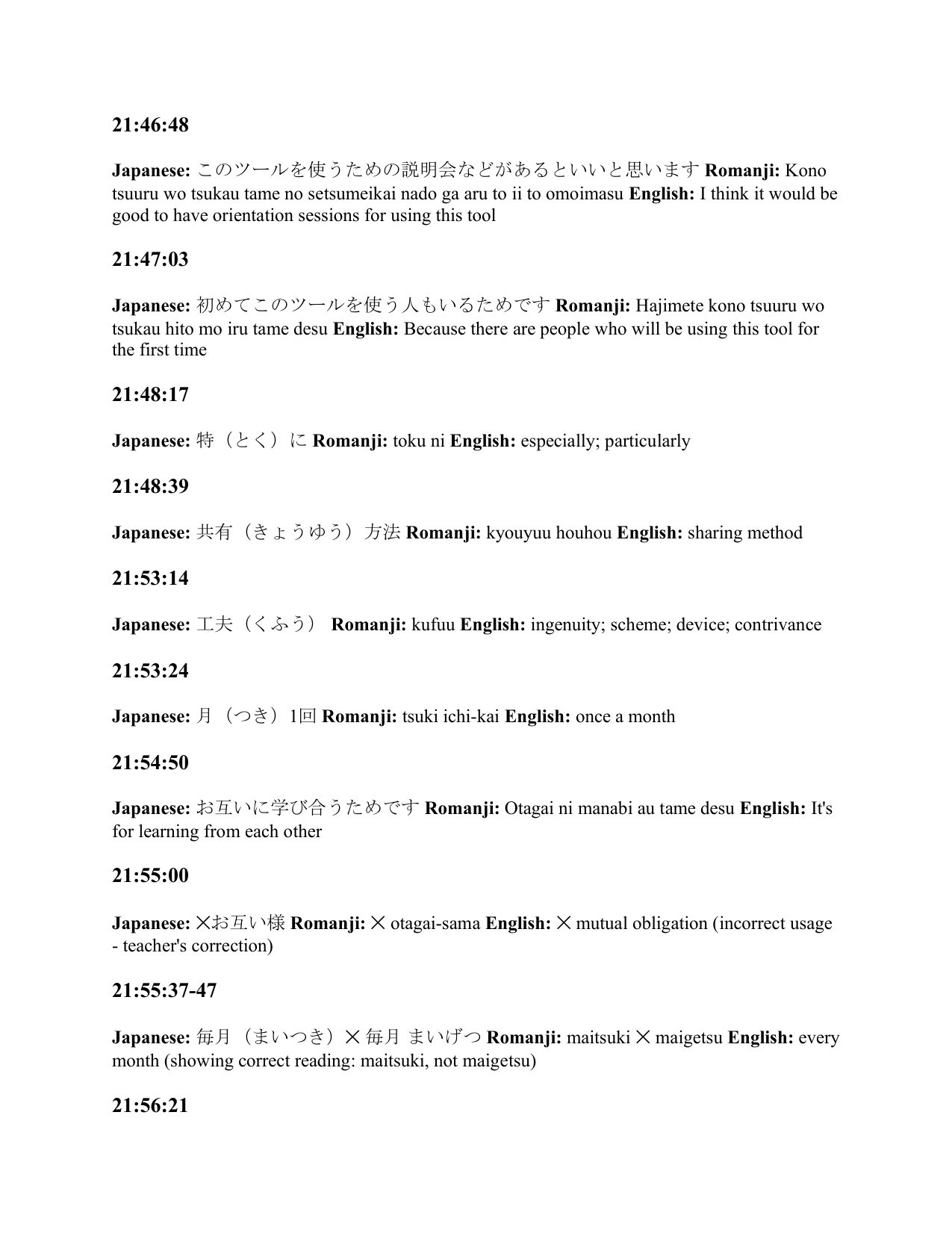
21:46:48
JPJapanese:このツールを使うための説明会などがあるといいと思いますRomanji:Kono
ENtsuuru wo tsukau tame no setsumeikai nado ga aru to ii to omoimasu English: I think it would be
good to have orientation sessions for using this tool
21:47:03
Japanese: 初めてこのツールを使う人もいるためです Romanji: Hajimete kono tsuuru wo
tsukau hito mo iru tame desu English: Because there are people who will be using this tool for
the first time
21:48:17
Japanese: 特(とく)に Romanji: toku ni English: especially; particularly
21:48:39
Japanese: 共有(きょうゆう)方法 Romanji: kyouyuu houhou English: sharing method
21:53:14
Japanese: 工夫(くふう) Romanji: kufuu English: ingenuity; scheme; device; contrivance
21:53:24
Japanese: 月(つき)1回 Romanji: tsuki ichi-kai English: once a month
21:54:50
Japanese: お互いに学び合うためです Romanji: Otagai ni manabi au tame desu English: It's
for learning from each other
21:55:00
Japanese: ✕お互い様 Romanji: ✕ otagai-sama English: ✕ mutual obligation (incorrect usage
- teacher's correction)
21:55:37-47
Japanese: 毎月(まいつき)✕ 毎月 まいげつ Romanji: maitsuki ✕ maigetsu English: every
month (showing correct reading: maitsuki, not maigetsu)
21:56:21
good to have orientation sessions for using this tool
21:47:03
Japanese: 初めてこのツールを使う人もいるためです Romanji: Hajimete kono tsuuru wo
tsukau hito mo iru tame desu English: Because there are people who will be using this tool for
the first time
21:48:17
Japanese: 特(とく)に Romanji: toku ni English: especially; particularly
21:48:39
Japanese: 共有(きょうゆう)方法 Romanji: kyouyuu houhou English: sharing method
21:53:14
Japanese: 工夫(くふう) Romanji: kufuu English: ingenuity; scheme; device; contrivance
21:53:24
Japanese: 月(つき)1回 Romanji: tsuki ichi-kai English: once a month
21:54:50
Japanese: お互いに学び合うためです Romanji: Otagai ni manabi au tame desu English: It's
for learning from each other
21:55:00
Japanese: ✕お互い様 Romanji: ✕ otagai-sama English: ✕ mutual obligation (incorrect usage
- teacher's correction)
21:55:37-47
Japanese: 毎月(まいつき)✕ 毎月 まいげつ Romanji: maitsuki ✕ maigetsu English: every
month (showing correct reading: maitsuki, not maigetsu)
21:56:21
หน้า 7
คลิกเพื่อขยาย
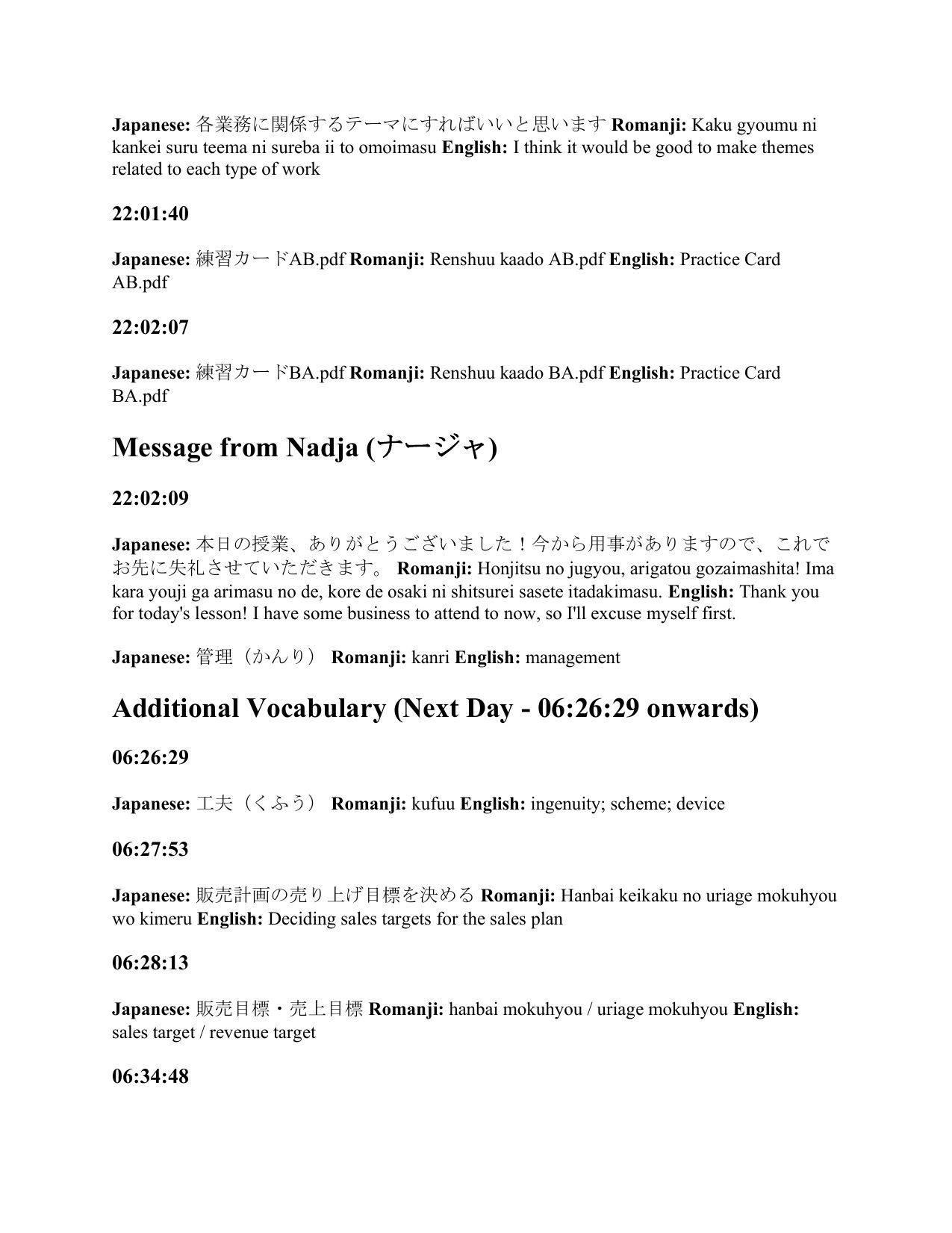
ENJapanese: 各業務に関係するテーマにすればいいと思います Romanji: Kaku gyoumu ni
kankei suru teema ni sureba ii to omoimasu English: I think it would be good to make themes
related to each type of work
22:01:40
Japanese: 練習カードAB.pdf Romanji: Renshuu kaado AB.pdf English: Practice Card
AB.pdf
22:02:07
Japanese: 練習カードBA.pdf Romanji: Renshuu kaado BA.pdf English: Practice Card
BA.pdf
Message from Nadja (ナージャ)
22:02:09
kankei suru teema ni sureba ii to omoimasu English: I think it would be good to make themes
related to each type of work
22:01:40
Japanese: 練習カードAB.pdf Romanji: Renshuu kaado AB.pdf English: Practice Card
AB.pdf
22:02:07
Japanese: 練習カードBA.pdf Romanji: Renshuu kaado BA.pdf English: Practice Card
BA.pdf
Message from Nadja (ナージャ)
22:02:09
JPJapanese:本日の授業、ありがとうございました!今から用事がありますので、これで
ENお先に失礼させていただきます。 Romanji: Honjitsu no jugyou, arigatou gozaimashita! Ima
kara youji ga arimasu no de, kore de osaki ni shitsurei sasete itadakimasu. English: Thank you
for today's lesson! I have some business to attend to now, so I'll excuse myself first.
Japanese: 管理(かんり) Romanji: kanri English: management
Additional Vocabulary (Next Day - 06:26:29 onwards)
06:26:29
Japanese: 工夫(くふう) Romanji: kufuu English: ingenuity; scheme; device
06:27:53
Japanese: 販売計画の売り上げ目標を決める Romanji: Hanbai keikaku no uriage mokuhyou
wo kimeru English: Deciding sales targets for the sales plan
06:28:13
Japanese: 販売目標・売上目標 Romanji: hanbai mokuhyou / uriage mokuhyou English:
sales target / revenue target
06:34:48
kara youji ga arimasu no de, kore de osaki ni shitsurei sasete itadakimasu. English: Thank you
for today's lesson! I have some business to attend to now, so I'll excuse myself first.
Japanese: 管理(かんり) Romanji: kanri English: management
Additional Vocabulary (Next Day - 06:26:29 onwards)
06:26:29
Japanese: 工夫(くふう) Romanji: kufuu English: ingenuity; scheme; device
06:27:53
Japanese: 販売計画の売り上げ目標を決める Romanji: Hanbai keikaku no uriage mokuhyou
wo kimeru English: Deciding sales targets for the sales plan
06:28:13
Japanese: 販売目標・売上目標 Romanji: hanbai mokuhyou / uriage mokuhyou English:
sales target / revenue target
06:34:48
หน้า 8
คลิกเพื่อขยาย
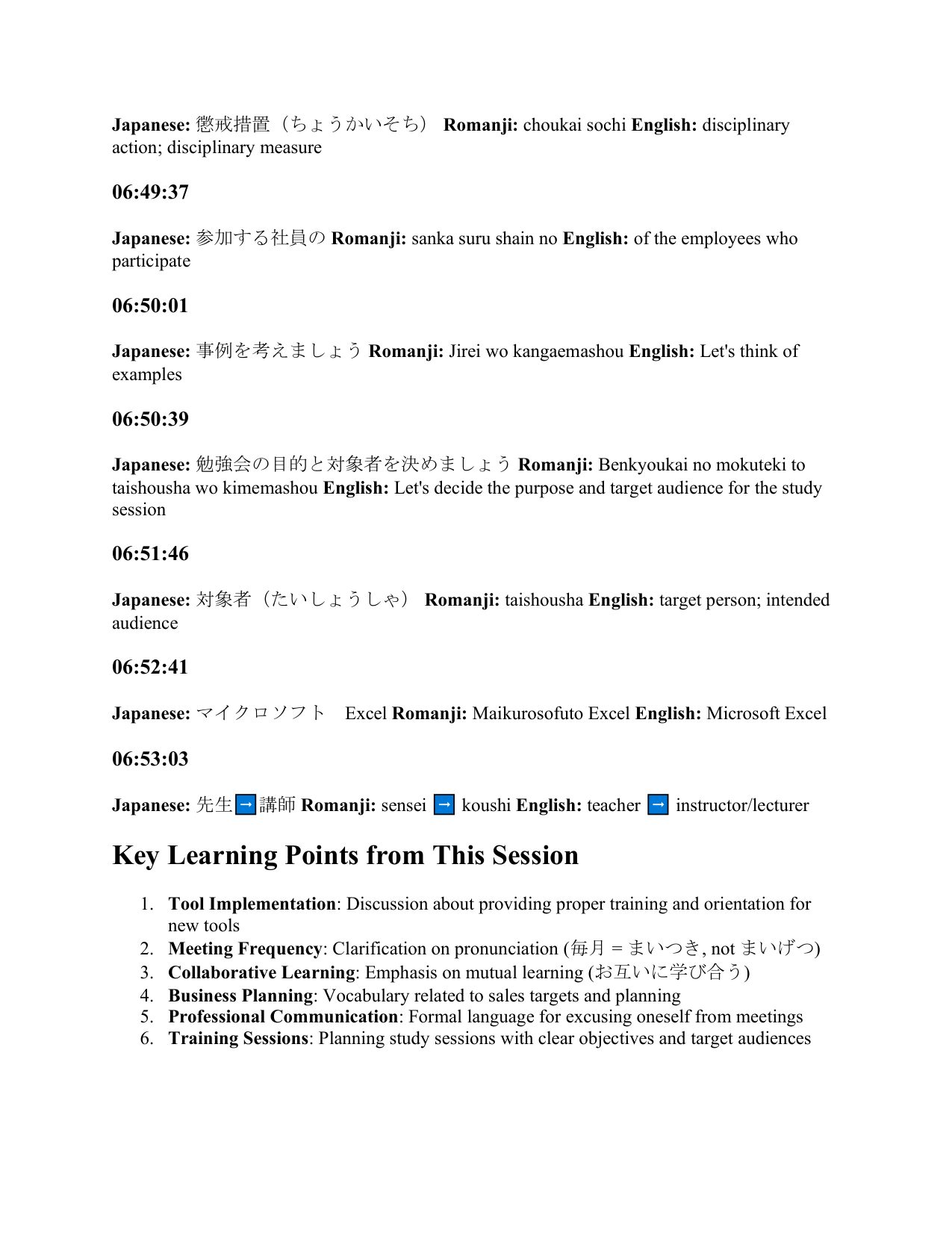
ENJapanese: 懲戒措置(ちょうかいそち) Romanji: choukai sochi English: disciplinary
action; disciplinary measure
06:49:37
Japanese: 参加する社員の Romanji: sanka suru shain no English: of the employees who
participate
06:50:01
Japanese: 事例を考えましょう Romanji: Jirei wo kangaemashou English: Let's think of
examples
06:50:39
Japanese: 勉強会の目的と対象者を決めましょう Romanji: Benkyoukai no mokuteki to
taishousha wo kimemashou English: Let's decide the purpose and target audience for the study
session
06:51:46
Japanese: 対象者(たいしょうしゃ) Romanji: taishousha English: target person; intended
audience
06:52:41
Japanese: マイクロソフト Excel Romanji: Maikurosofuto Excel English: Microsoft Excel
06:53:03
Japanese: 先生 講師 Romanji: sensei koushi English: teacher instructor/lecturer
Key Learning Points from This Session
1. Tool Implementation: Discussion about providing proper training and orientation for
new tools
2. Meeting Frequency: Clarification on pronunciation (毎月 = まいつき, not まいげつ)
3. Collaborative Learning: Emphasis on mutual learning (お互いに学び合う)
4. Business Planning: Vocabulary related to sales targets and planning
5. Professional Communication: Formal language for excusing oneself from meetings
6. Training Sessions: Planning study sessions with clear objectives and target audiences
action; disciplinary measure
06:49:37
Japanese: 参加する社員の Romanji: sanka suru shain no English: of the employees who
participate
06:50:01
Japanese: 事例を考えましょう Romanji: Jirei wo kangaemashou English: Let's think of
examples
06:50:39
Japanese: 勉強会の目的と対象者を決めましょう Romanji: Benkyoukai no mokuteki to
taishousha wo kimemashou English: Let's decide the purpose and target audience for the study
session
06:51:46
Japanese: 対象者(たいしょうしゃ) Romanji: taishousha English: target person; intended
audience
06:52:41
Japanese: マイクロソフト Excel Romanji: Maikurosofuto Excel English: Microsoft Excel
06:53:03
Japanese: 先生 講師 Romanji: sensei koushi English: teacher instructor/lecturer
Key Learning Points from This Session
1. Tool Implementation: Discussion about providing proper training and orientation for
new tools
2. Meeting Frequency: Clarification on pronunciation (毎月 = まいつき, not まいげつ)
3. Collaborative Learning: Emphasis on mutual learning (お互いに学び合う)
4. Business Planning: Vocabulary related to sales targets and planning
5. Professional Communication: Formal language for excusing oneself from meetings
6. Training Sessions: Planning study sessions with clear objectives and target audiences