หน้า 1
คลิกเพื่อขยาย
JP日本語スライド講座
ENJapanese Lesson Extract — Sentence-by-Sentence Study Guide
Pages 1–30 • Japanese / Romaji / English
Pages 1–30 • Japanese / Romaji / English
หน้า 2

คลิกเพื่อขยาย
ENBusiness Mindset
หน้า 3
คลิกเพื่อขยาย
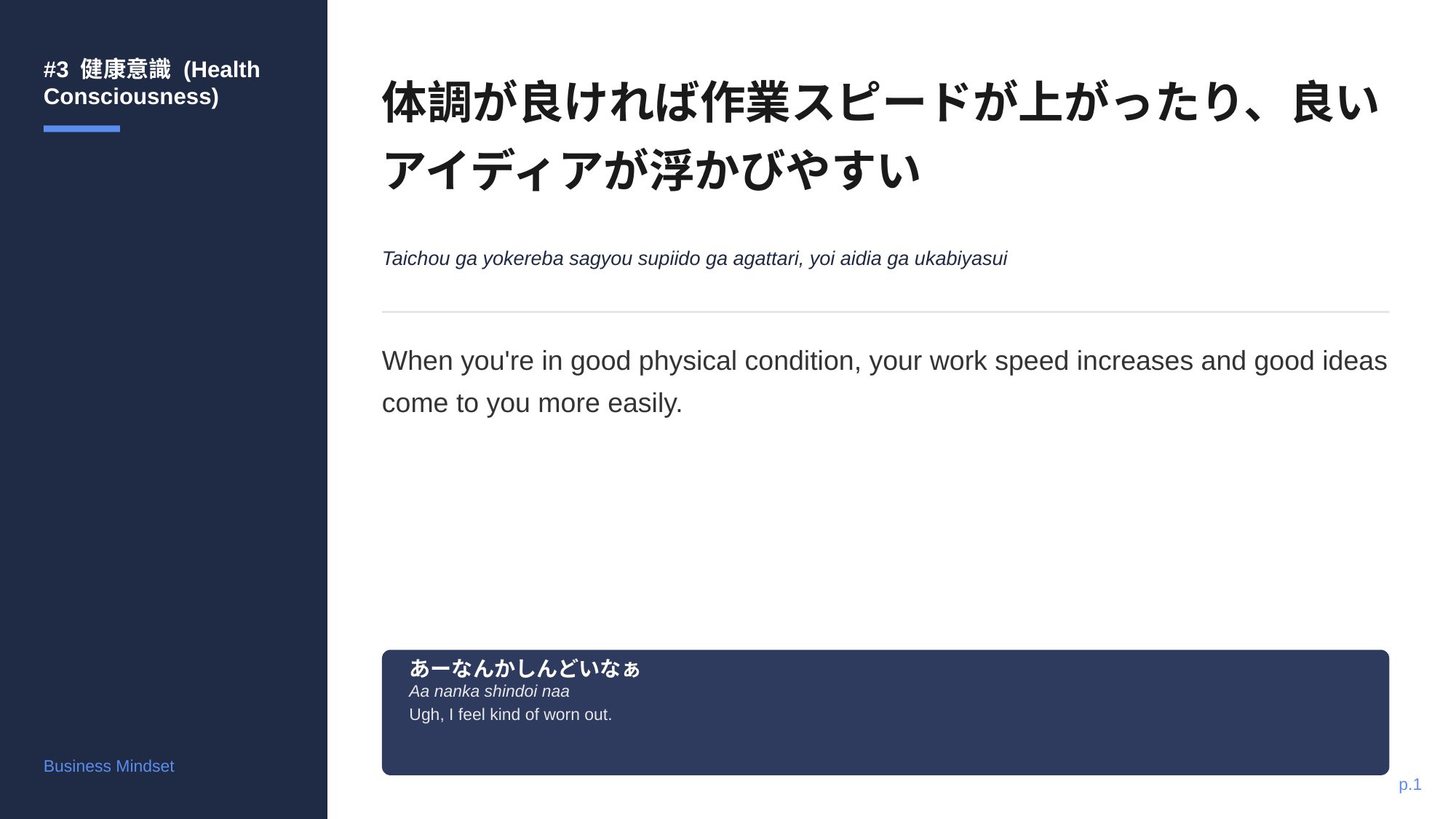
EN#3 健康意識 (Health
Consciousness)
Consciousness)
JP体調が良ければ作業スピードが上がったり、良い
アイディアが浮かびやすい
アイディアが浮かびやすい
EN Taichou ga yokereba sagyou supiido ga agattari, yoi aidia ga ukabiyasui
When you're in good physical condition, your work speed increases and good ideas
come to you more easily.
When you're in good physical condition, your work speed increases and good ideas
come to you more easily.
JPあーなんかしんどいなぁ
EN Aa nanka shindoi naa
Ugh, I feel kind of worn out.
Business Mindset
p.1
Ugh, I feel kind of worn out.
Business Mindset
p.1
หน้า 4
คลิกเพื่อขยาย
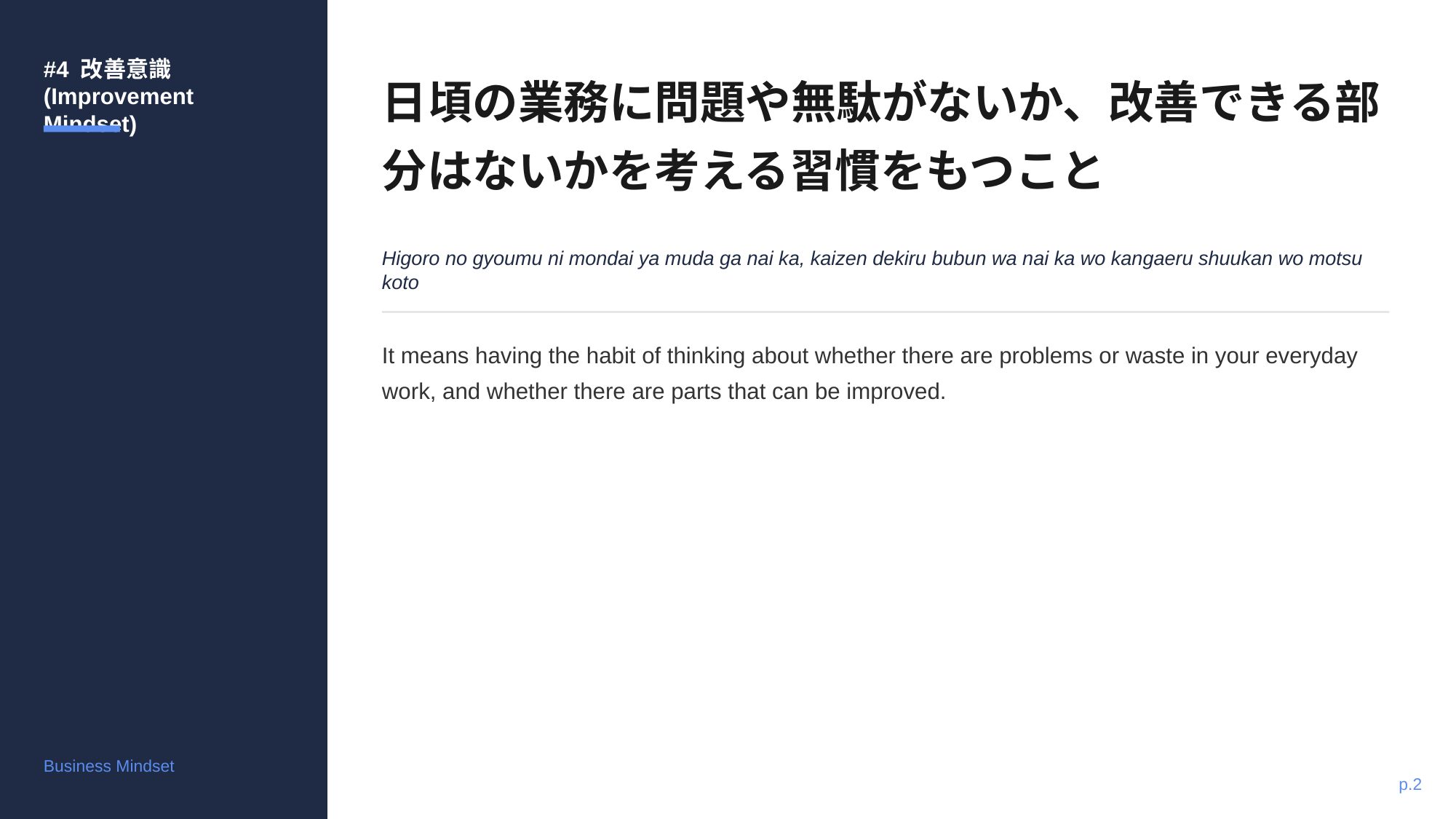
JP#4改善意識
EN(Improvement
Mindset)
Mindset)
JP日頃の業務に問題や無駄がないか、改善できる部
分はないかを考える習慣をもつこと
分はないかを考える習慣をもつこと
EN Higoro no gyoumu ni mondai ya muda ga nai ka, kaizen dekiru bubun wa nai ka wo kangaeru shuukan wo motsu
koto
It means having the habit of thinking about whether there are problems or waste in your everyday
work, and whether there are parts that can be improved.
Business Mindset
p.2
koto
It means having the habit of thinking about whether there are problems or waste in your everyday
work, and whether there are parts that can be improved.
Business Mindset
p.2
หน้า 5
คลิกเพื่อขยาย
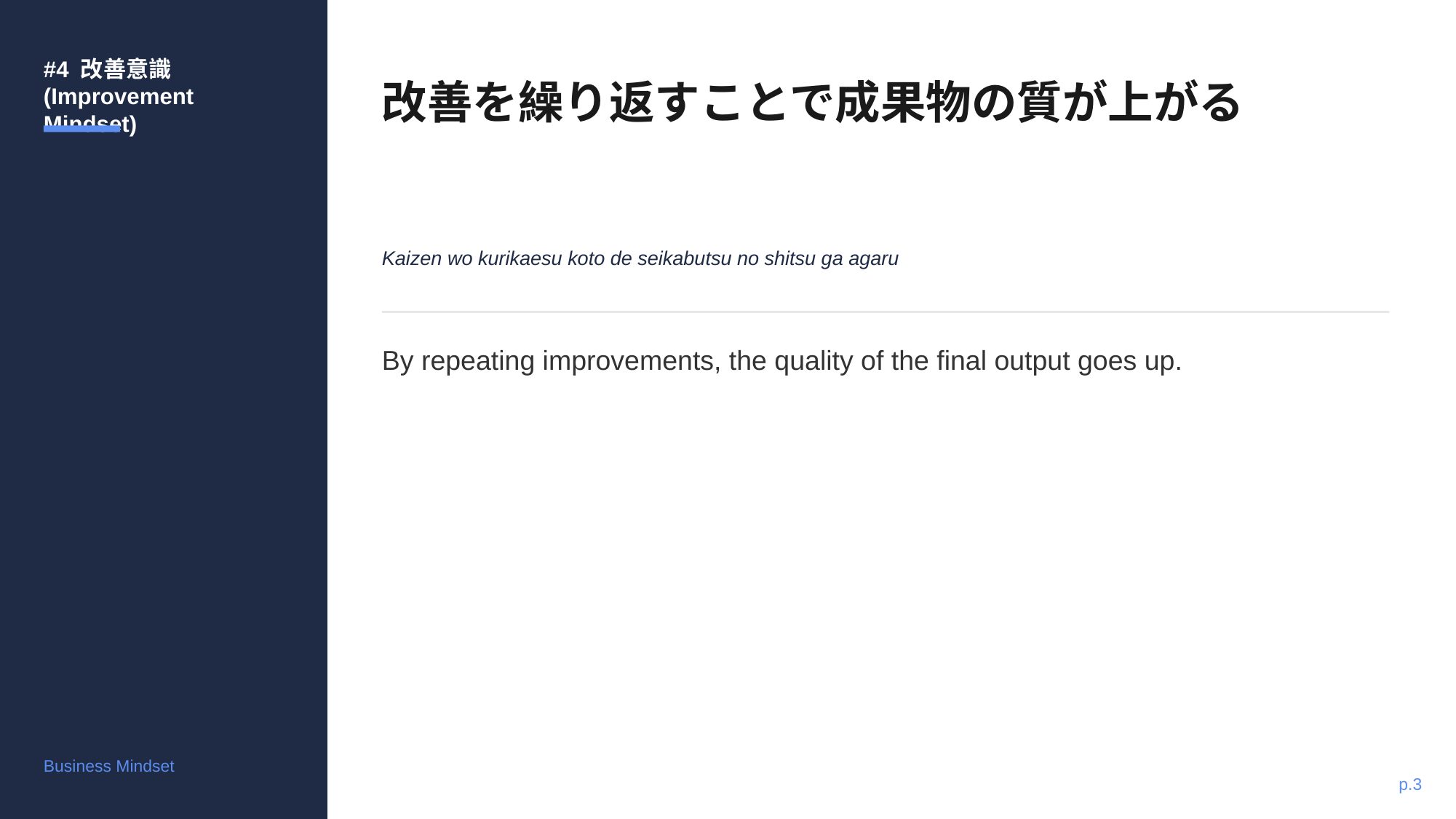
JP#4改善意識
EN(Improvement
Mindset)
Mindset)
JP改善を繰り返すことで成果物の質が上がる
EN Kaizen wo kurikaesu koto de seikabutsu no shitsu ga agaru
By repeating improvements, the quality of the final output goes up.
Business Mindset
p.3
By repeating improvements, the quality of the final output goes up.
Business Mindset
p.3
หน้า 6
คลิกเพื่อขยาย
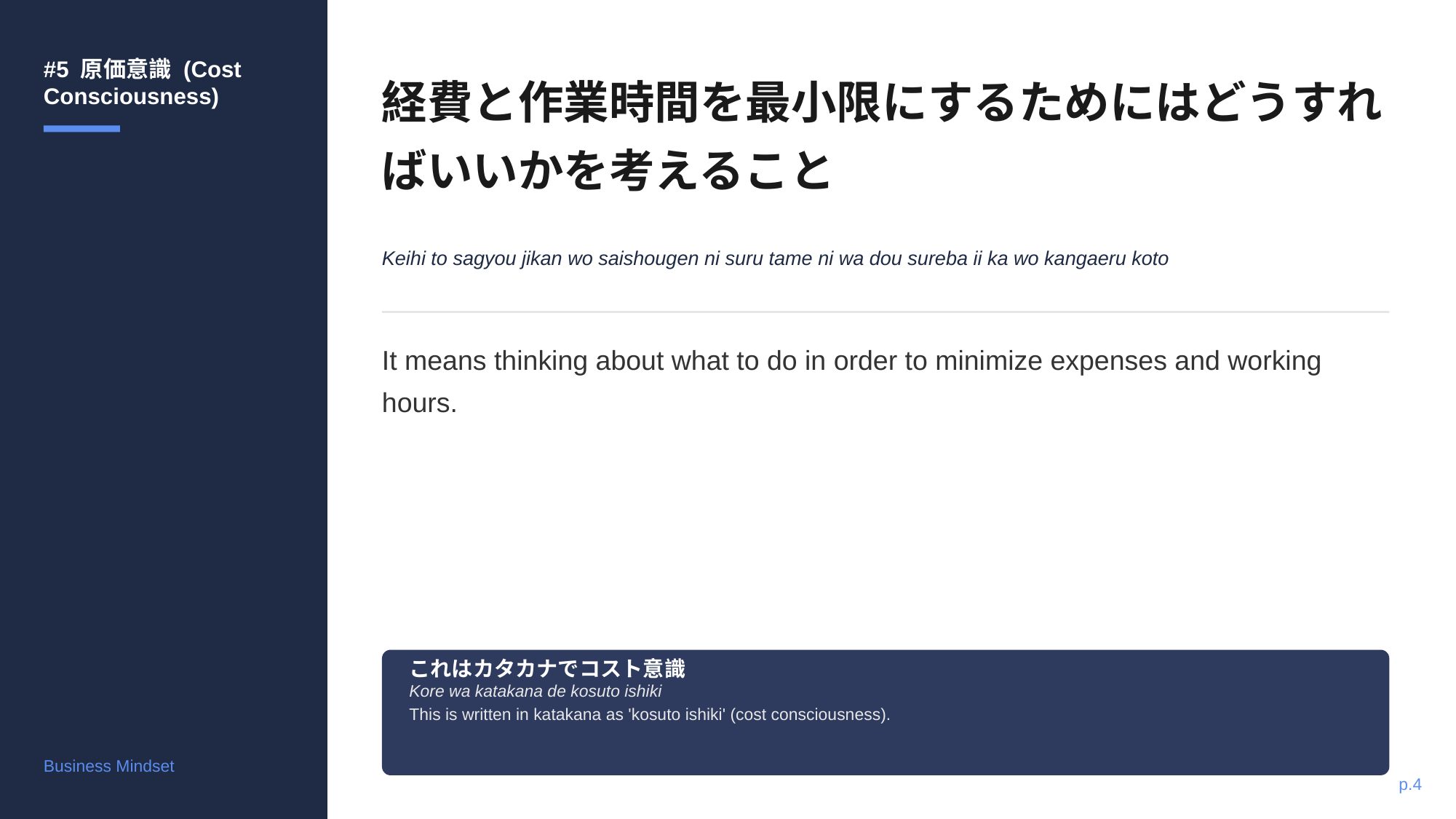
JP#5原価意識(Cost
ENConsciousness)
JP経費と作業時間を最小限にするためにはどうすれ
ばいいかを考えること
ばいいかを考えること
EN Keihi to sagyou jikan wo saishougen ni suru tame ni wa dou sureba ii ka wo kangaeru koto
It means thinking about what to do in order to minimize expenses and working
hours.
It means thinking about what to do in order to minimize expenses and working
hours.
JPこれはカタカナでコスト意識
EN Kore wa katakana de kosuto ishiki
This is written in katakana as 'kosuto ishiki' (cost consciousness).
Business Mindset
p.4
This is written in katakana as 'kosuto ishiki' (cost consciousness).
Business Mindset
p.4
หน้า 7
คลิกเพื่อขยาย
JP#5原価意識(Cost
ENConsciousness)
JP経費と作業時間をできるだけ少なくすることがで
きれば企業の業績は良くなる
きれば企業の業績は良くなる
EN Keihi to sagyou jikan wo dekiru dake sukunaku suru koto ga dekireba kigyou no gyouseki wa yoku naru
If a company can minimize expenses and work hours as much as possible, its
performance will improve.
Business Mindset
Page 6 repeats this same slide (duplicate video frame). p.5
If a company can minimize expenses and work hours as much as possible, its
performance will improve.
Business Mindset
Page 6 repeats this same slide (duplicate video frame). p.5
หน้า 8
คลิกเพื่อขยาย
JP#6顧客意識
EN(Customer Focus)
JPお客様に感謝して、常にお客様を大切にすること
EN Okyakusama ni kansha shite, tsune ni okyakusama wo taisetsu ni suru koto
It's about being grateful to customers and always prioritizing their needs.
Business Mindset
p.7
It's about being grateful to customers and always prioritizing their needs.
Business Mindset
p.7
หน้า 9
คลิกเพื่อขยาย
JP#6顧客意識
(CustomerFocus)お客様を大切にできることは商品やサービスの改善につながり顧客満足度が上がること
でその顧客と持続的な関係を持つことができる
(CustomerFocus)お客様を大切にできることは商品やサービスの改善につながり顧客満足度が上がること
でその顧客と持続的な関係を持つことができる
EN Okyakusama wo taisetsu ni dekiru koto wa shouhin ya saabisu no kaizen ni tsunagari, kokyaku manzokudo ga
agaru koto de sono kokyaku to jizokuteki na kankei wo motsu koto ga dekiru
Taking care of customers can lead to improvements in products and services, resulting in increased
customer satisfaction and the ability to maintain a long-term relationship with those customers.
Business Mindset
p.8
agaru koto de sono kokyaku to jizokuteki na kankei wo motsu koto ga dekiru
Taking care of customers can lead to improvements in products and services, resulting in increased
customer satisfaction and the ability to maintain a long-term relationship with those customers.
Business Mindset
p.8
หน้า 10
คลิกเพื่อขยาย
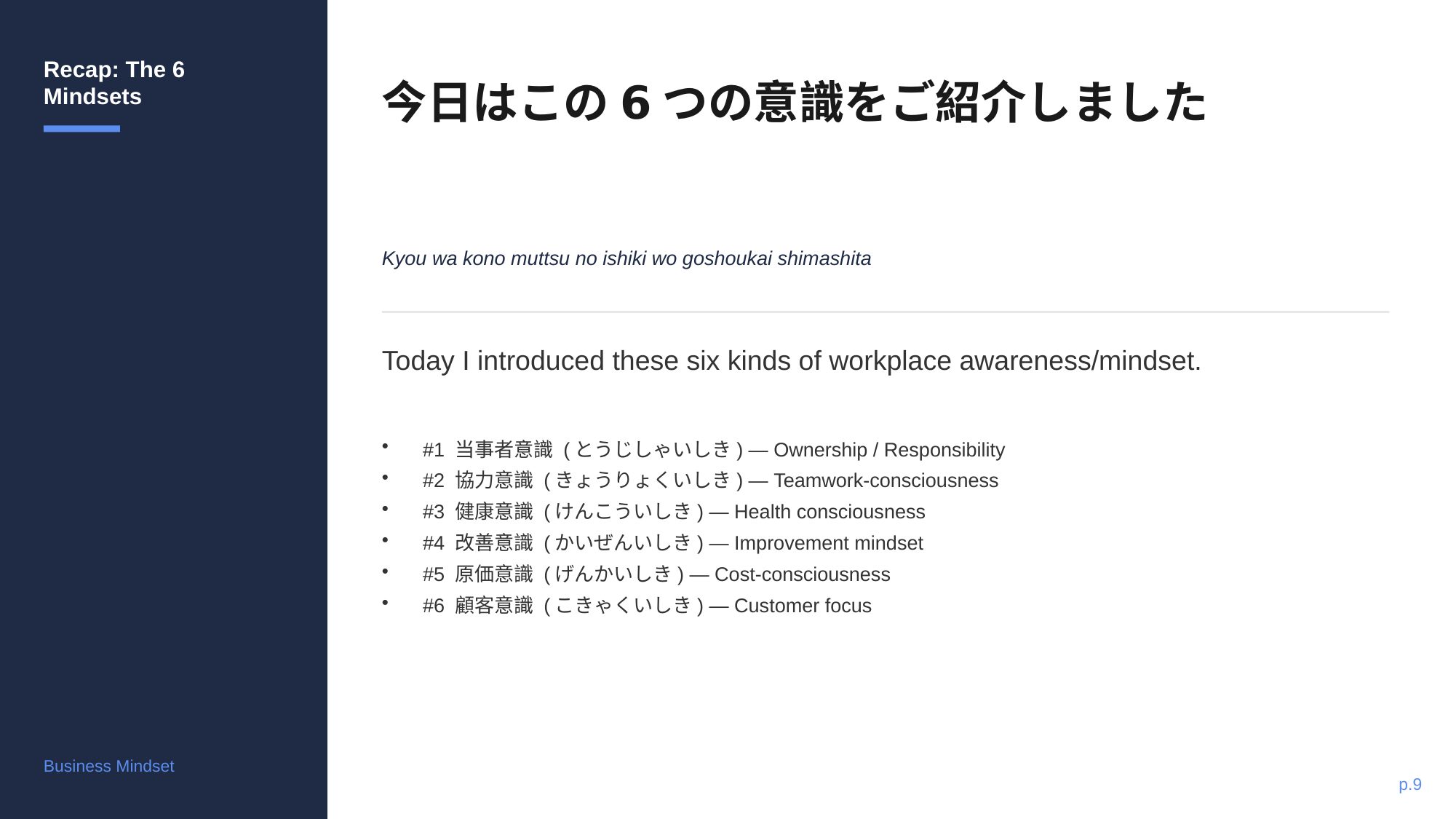
ENRecap: The 6
Mindsets
Mindsets
JP今日はこの6つの意識をご紹介しました
EN Kyou wa kono muttsu no ishiki wo goshoukai shimashita
Today I introduced these six kinds of workplace awareness/mindset.
• #1 当事者意識 ( とうじしゃいしき ) — Ownership / Responsibility
• #2 協力意識 ( きょうりょくいしき ) — Teamwork-consciousness
• #3 健康意識 ( けんこういしき ) — Health consciousness
• #4 改善意識 ( かいぜんいしき ) — Improvement mindset
• #5 原価意識 ( げんかいしき ) — Cost-consciousness
• #6 顧客意識 ( こきゃくいしき ) — Customer focus
Business Mindset
p.9
Today I introduced these six kinds of workplace awareness/mindset.
• #1 当事者意識 ( とうじしゃいしき ) — Ownership / Responsibility
• #2 協力意識 ( きょうりょくいしき ) — Teamwork-consciousness
• #3 健康意識 ( けんこういしき ) — Health consciousness
• #4 改善意識 ( かいぜんいしき ) — Improvement mindset
• #5 原価意識 ( げんかいしき ) — Cost-consciousness
• #6 顧客意識 ( こきゃくいしき ) — Customer focus
Business Mindset
p.9
หน้า 11

คลิกเพื่อขยาย
ENQuiz Trivia
หน้า 12
คลิกเพื่อขยาย
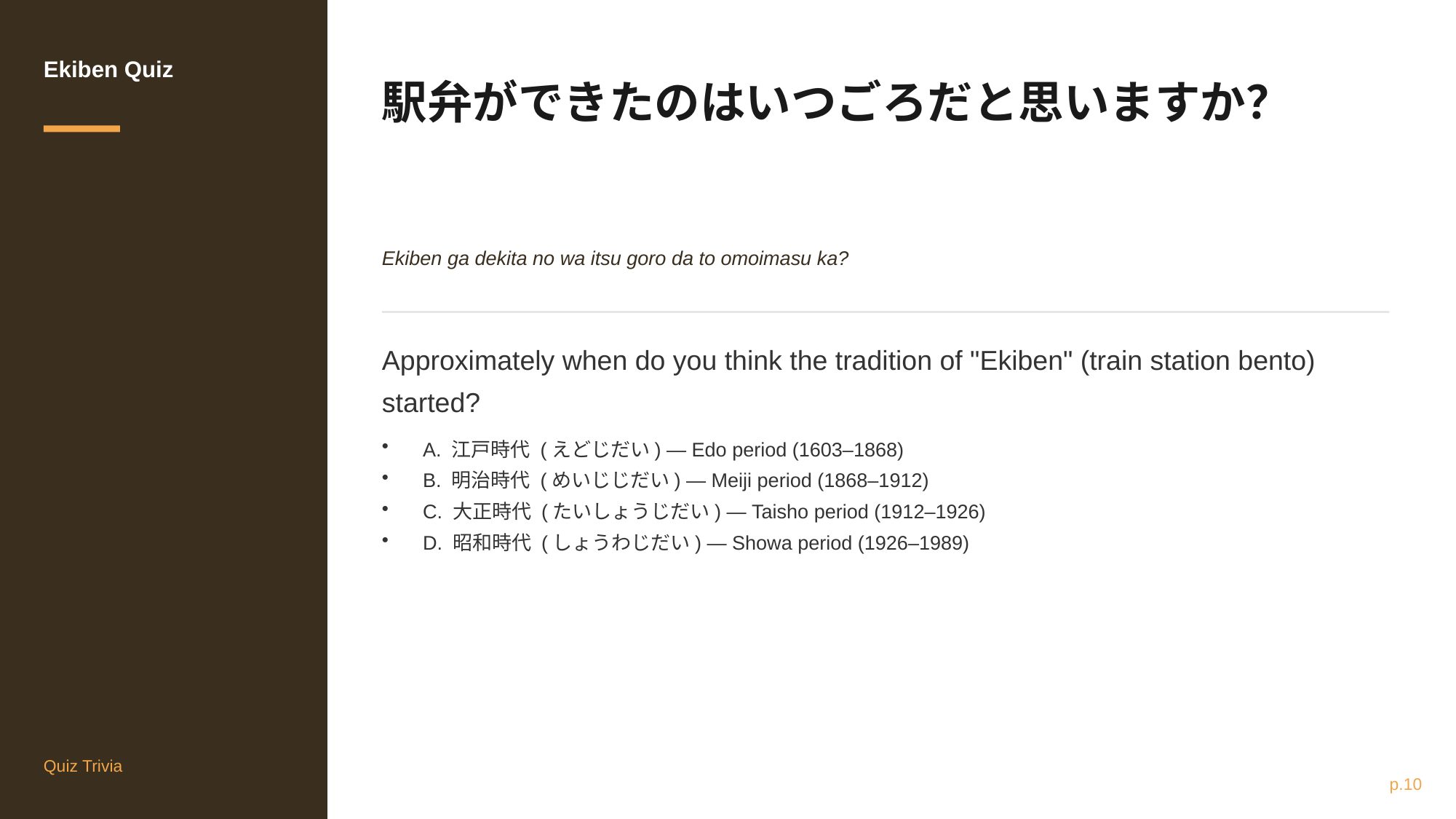
ENEkiben Quiz
JP駅弁ができたのはいつごろだと思いますか?
EN Ekiben ga dekita no wa itsu goro da to omoimasu ka?
Approximately when do you think the tradition of "Ekiben" (train station bento)
started?
• A. 江戸時代 ( えどじだい ) — Edo period (1603–1868)
• B. 明治時代 ( めいじじだい ) — Meiji period (1868–1912)
• C. 大正時代 ( たいしょうじだい ) — Taisho period (1912–1926)
• D. 昭和時代 ( しょうわじだい ) — Showa period (1926–1989)
Quiz Trivia
p.10
Approximately when do you think the tradition of "Ekiben" (train station bento)
started?
• A. 江戸時代 ( えどじだい ) — Edo period (1603–1868)
• B. 明治時代 ( めいじじだい ) — Meiji period (1868–1912)
• C. 大正時代 ( たいしょうじだい ) — Taisho period (1912–1926)
• D. 昭和時代 ( しょうわじだい ) — Showa period (1926–1989)
Quiz Trivia
p.10
หน้า 13
คลิกเพื่อขยาย
ENPolite Japanese (Keigo) Tip
หน้า 14
คลิกเพื่อขยาย
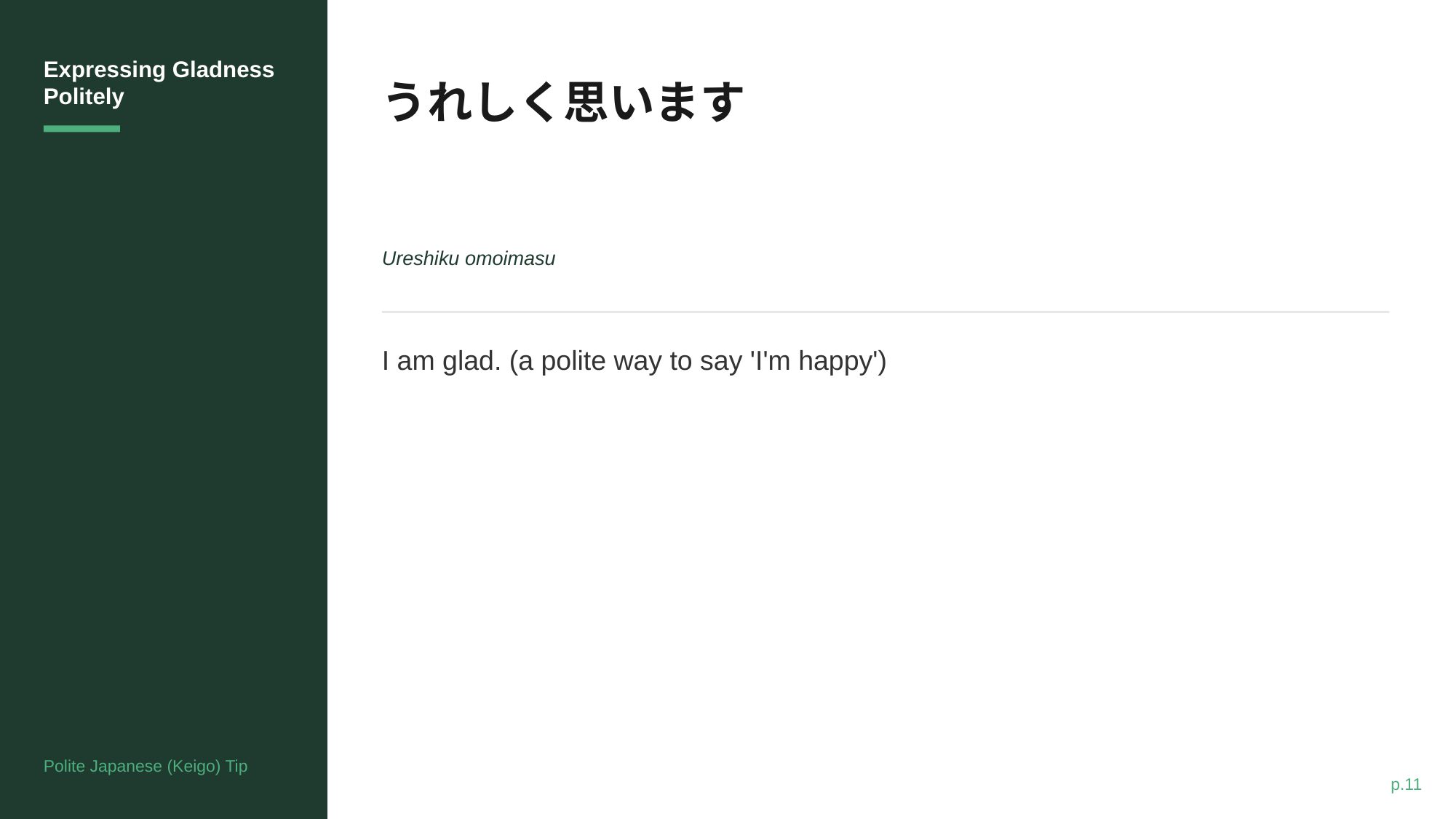
ENExpressing Gladness
Politely
Politely
JPうれしく思います
EN Ureshiku omoimasu
I am glad. (a polite way to say 'I'm happy')
Polite Japanese (Keigo) Tip
p.11
I am glad. (a polite way to say 'I'm happy')
Polite Japanese (Keigo) Tip
p.11
หน้า 15
คลิกเพื่อขยาย
ENExpressing Gladness
Politely
Politely
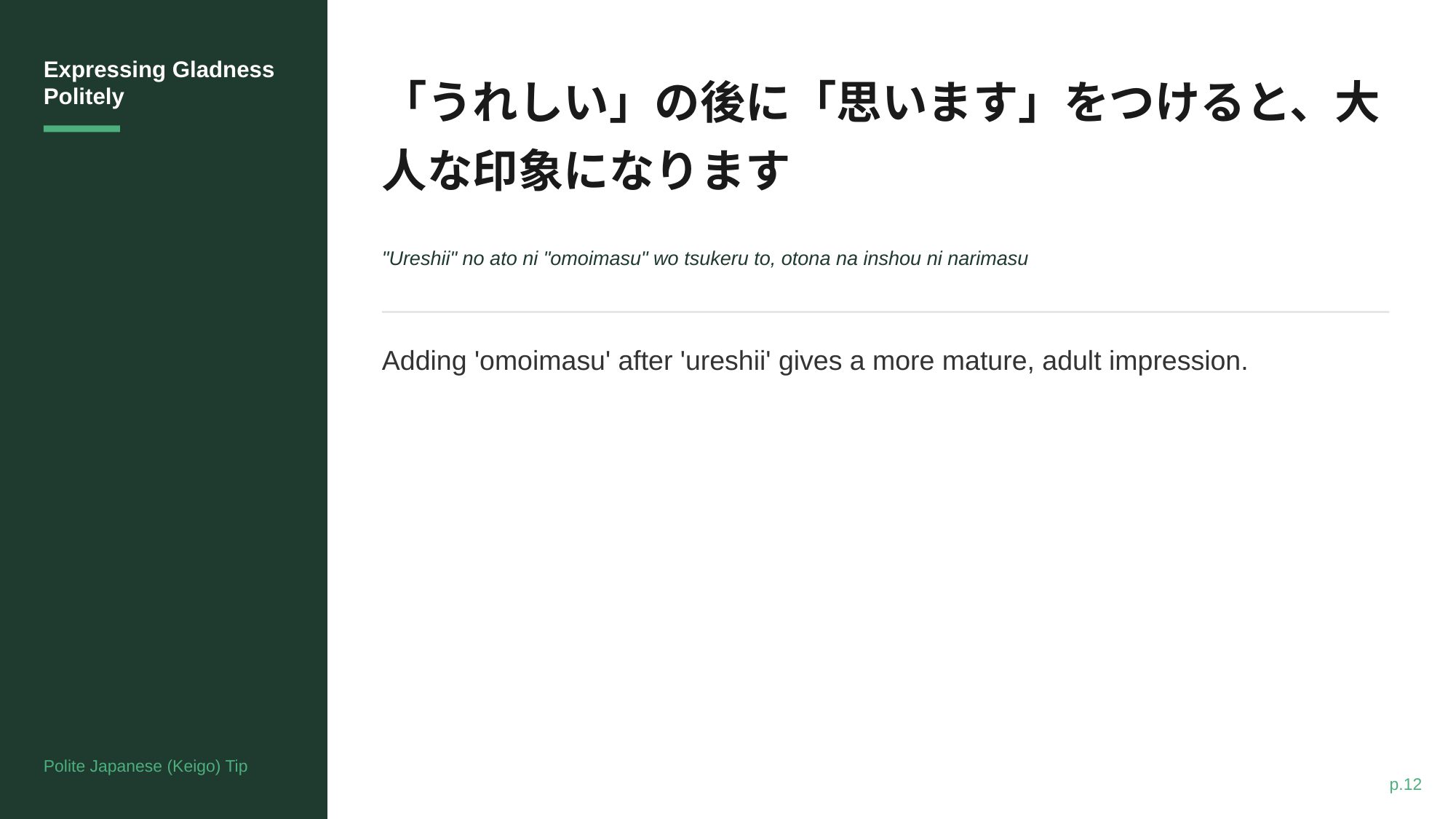
JP「うれしい」の後に「思います」をつけると、大
人な印象になります
人な印象になります
EN "Ureshii" no ato ni "omoimasu" wo tsukeru to, otona na inshou ni narimasu
Adding 'omoimasu' after 'ureshii' gives a more mature, adult impression.
Polite Japanese (Keigo) Tip
p.12
Adding 'omoimasu' after 'ureshii' gives a more mature, adult impression.
Polite Japanese (Keigo) Tip
p.12
หน้า 16
คลิกเพื่อขยาย
ENExpressing Gladness
Politely
Politely
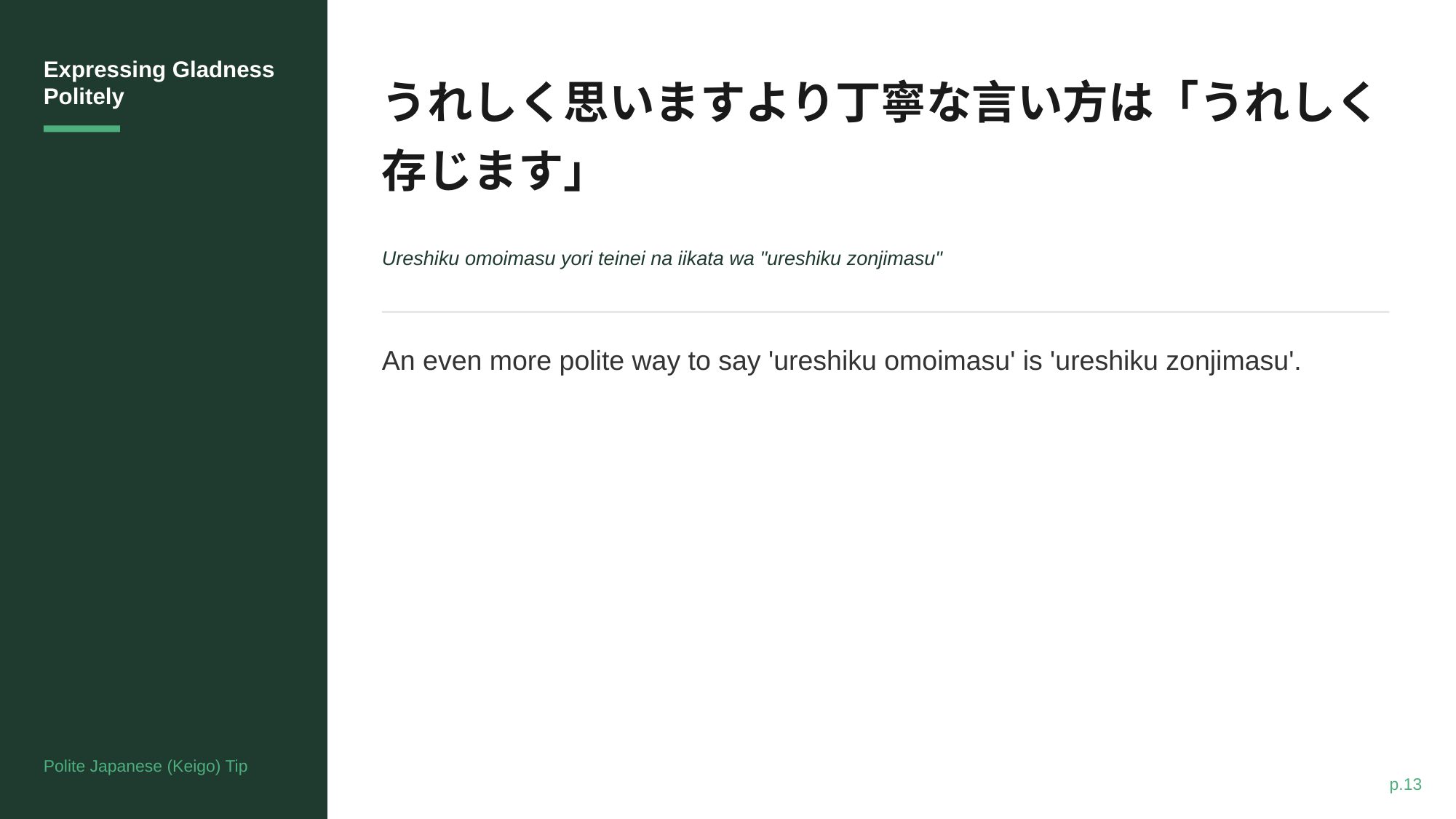
JPうれしく思いますより丁寧な言い方は「うれしく
存じます」
存じます」
EN Ureshiku omoimasu yori teinei na iikata wa "ureshiku zonjimasu"
An even more polite way to say 'ureshiku omoimasu' is 'ureshiku zonjimasu'.
Polite Japanese (Keigo) Tip
p.13
An even more polite way to say 'ureshiku omoimasu' is 'ureshiku zonjimasu'.
Polite Japanese (Keigo) Tip
p.13
หน้า 17

คลิกเพื่อขยาย
ENVocabulary: Work
หน้า 18
คลิกเพื่อขยาย
ENVocabulary
JP通勤(する)
EN Tsuukin (suru)
to commute (to work)
Vocabulary: Work
p.14
to commute (to work)
Vocabulary: Work
p.14
หน้า 19
คลิกเพื่อขยาย
ENVocabulary
JP早退(する)
EN Soutai (suru)
to leave work/school early
Vocabulary: Work
p.15
to leave work/school early
Vocabulary: Work
p.15
หน้า 20
คลิกเพื่อขยาย
ENVocabulary
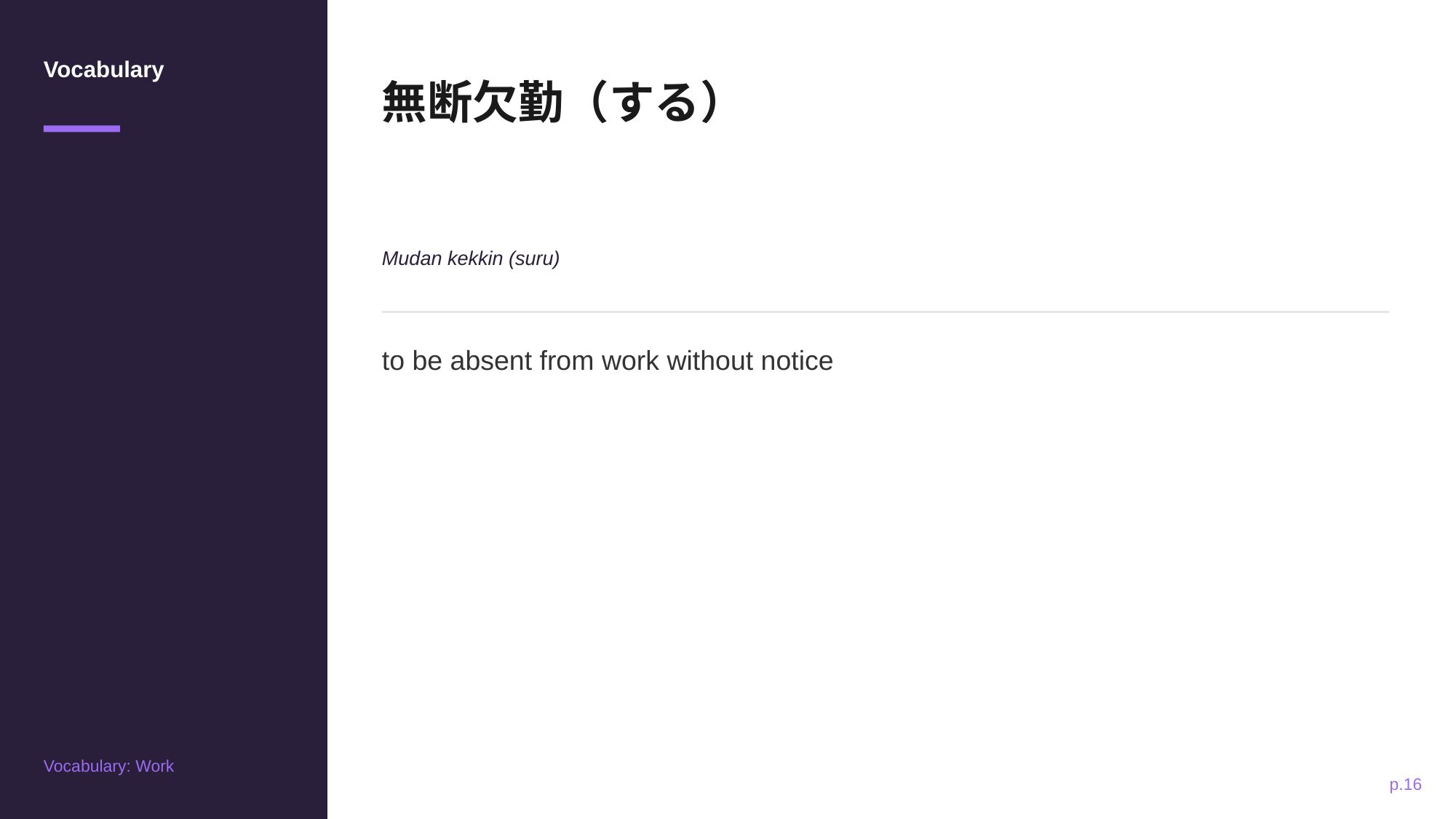
JP無断欠勤(する)
EN Mudan kekkin (suru)
to be absent from work without notice
Vocabulary: Work
p.16
to be absent from work without notice
Vocabulary: Work
p.16
หน้า 21
คลิกเพื่อขยาย
ENVocabulary
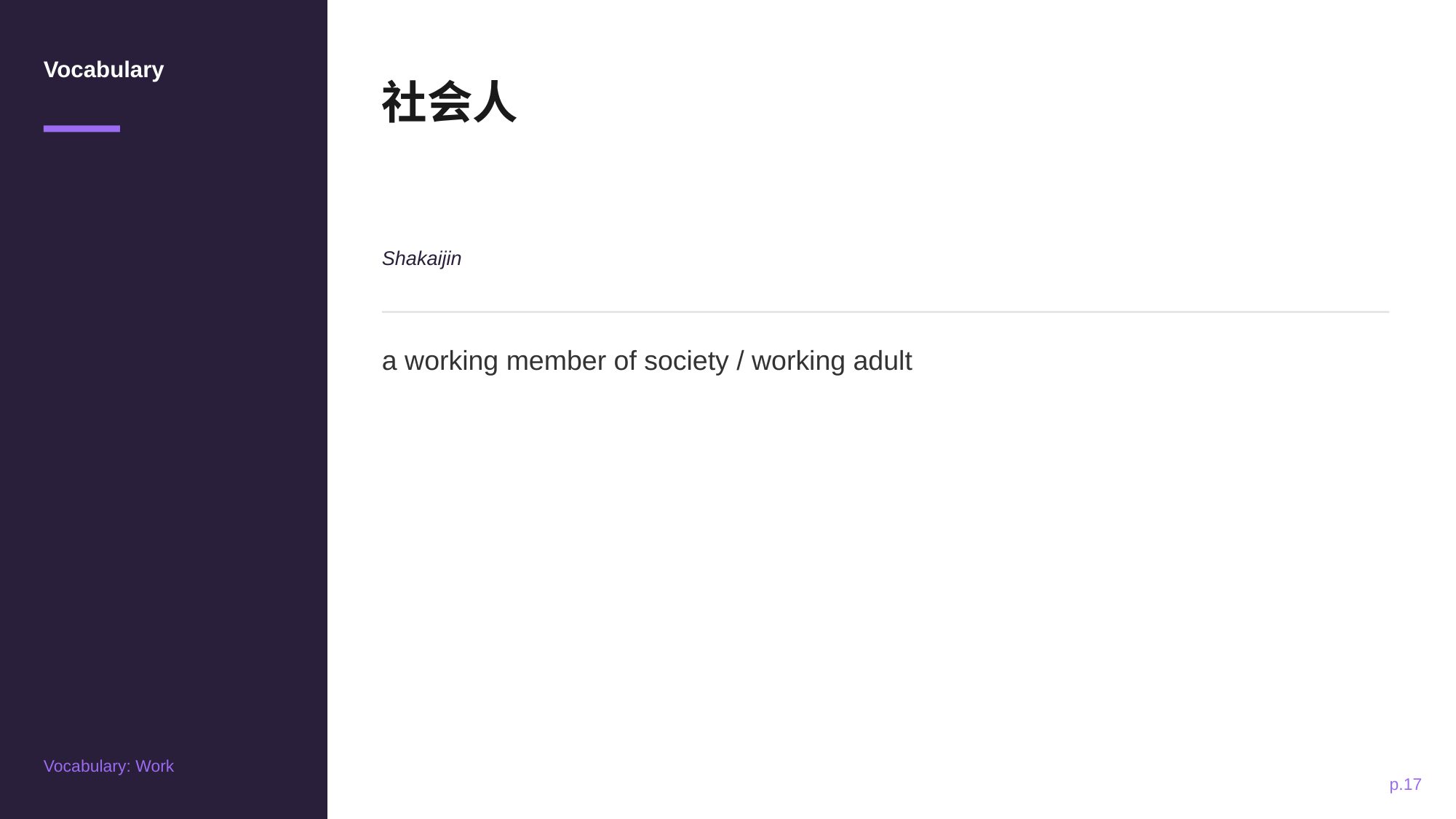
JP社会人
EN Shakaijin
a working member of society / working adult
Vocabulary: Work
p.17
a working member of society / working adult
Vocabulary: Work
p.17
หน้า 22
คลิกเพื่อขยาย
ENVocabulary
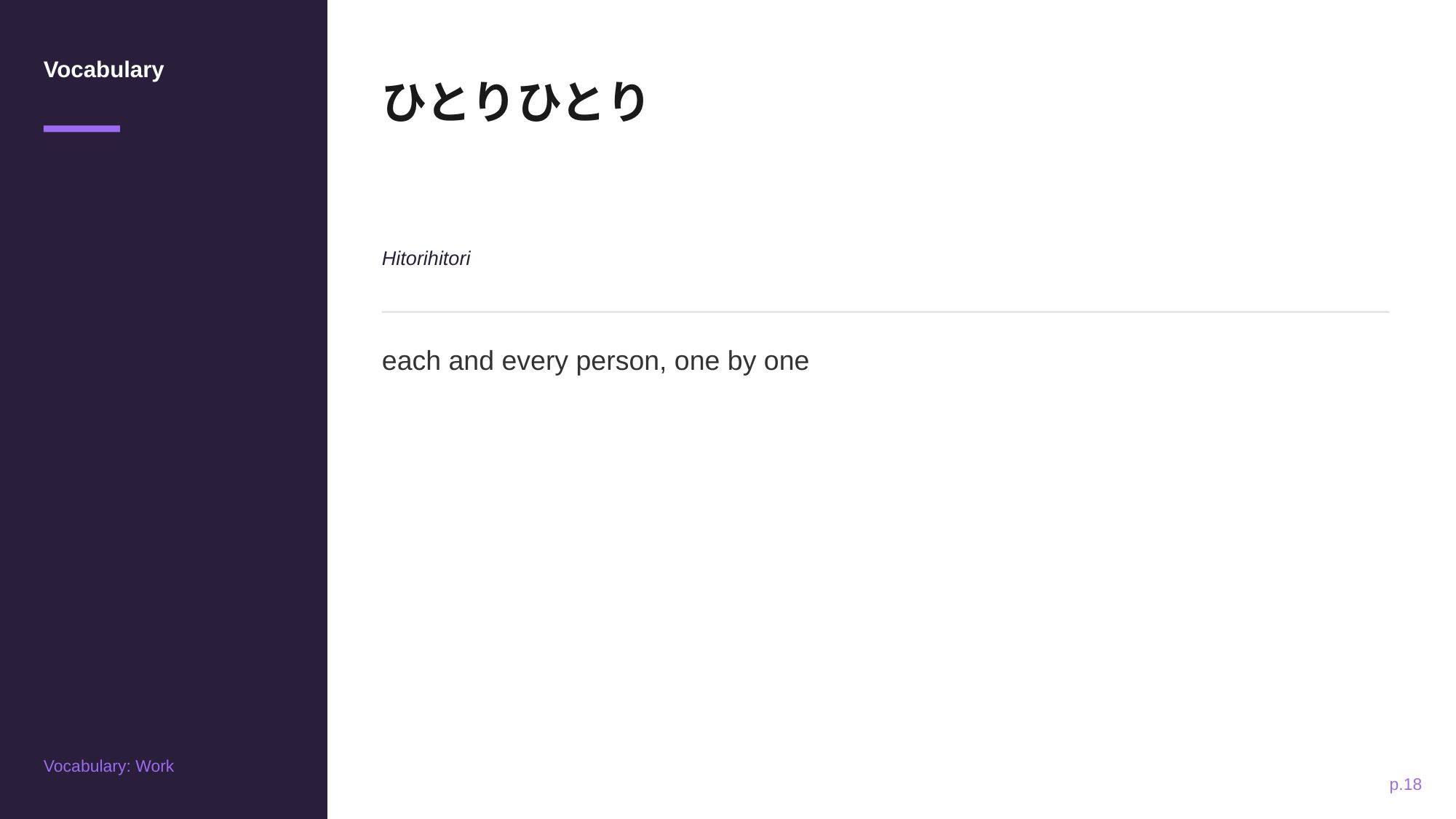
JPひとりひとり
EN Hitorihitori
each and every person, one by one
Vocabulary: Work
p.18
each and every person, one by one
Vocabulary: Work
p.18
หน้า 23
คลิกเพื่อขยาย
ENVocabulary
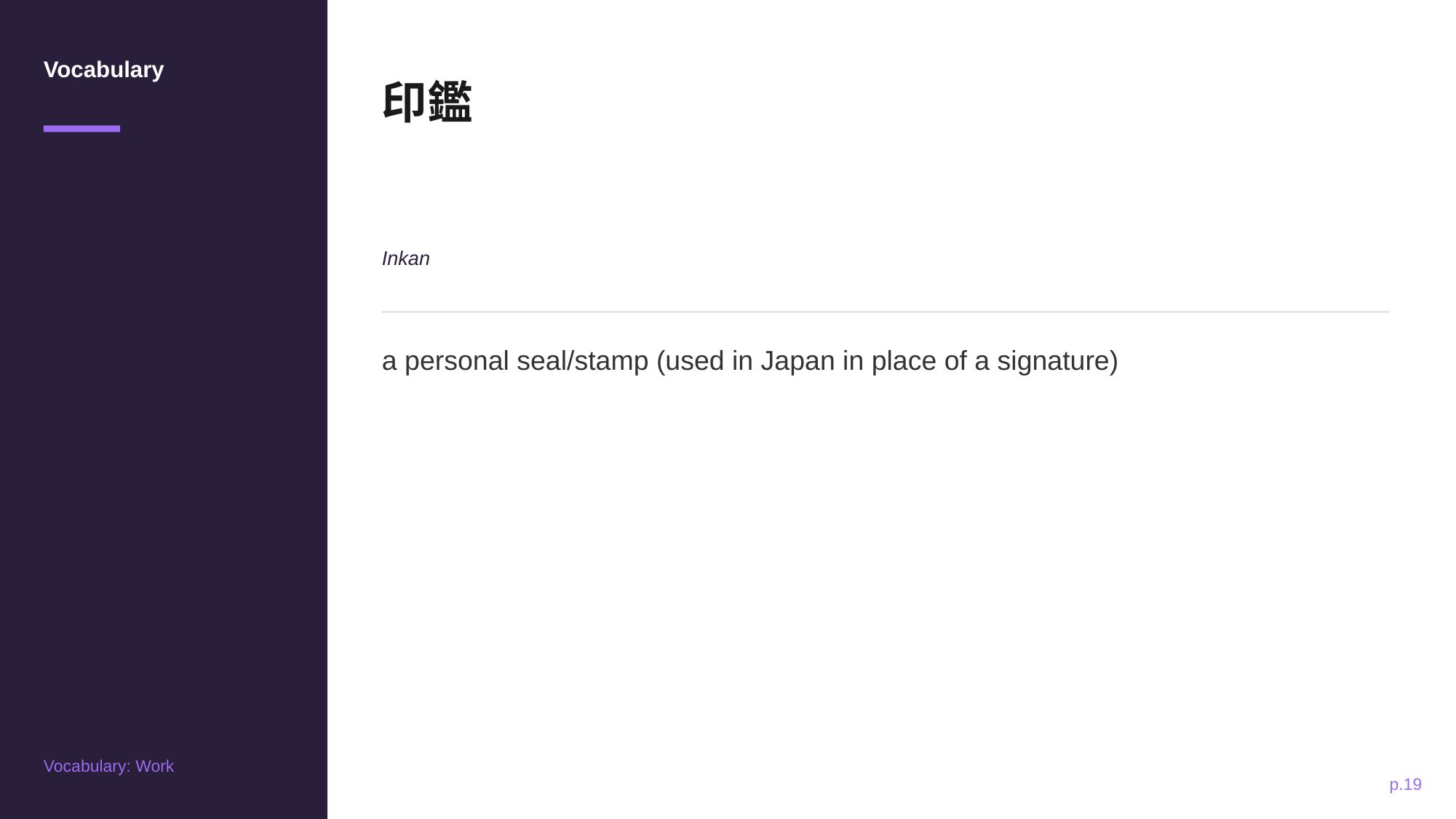
JP印鑑
EN Inkan
a personal seal/stamp (used in Japan in place of a signature)
Vocabulary: Work
p.19
a personal seal/stamp (used in Japan in place of a signature)
Vocabulary: Work
p.19
หน้า 24
คลิกเพื่อขยาย
ENVocabulary: Hair & Appearance
หน้า 25
คลิกเพื่อขยาย
ENVocabulary
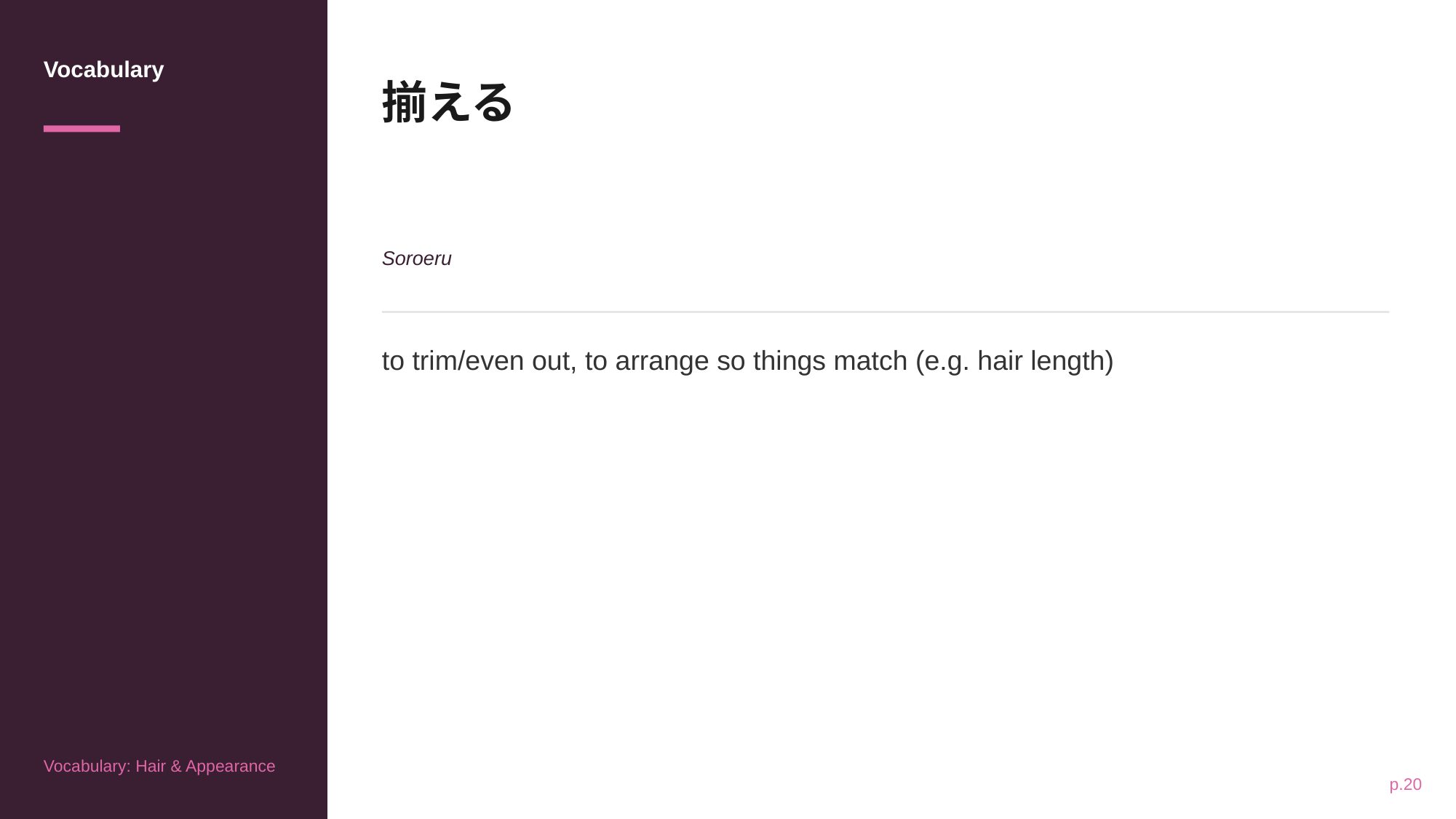
JP揃える
EN Soroeru
to trim/even out, to arrange so things match (e.g. hair length)
Vocabulary: Hair & Appearance
p.20
to trim/even out, to arrange so things match (e.g. hair length)
Vocabulary: Hair & Appearance
p.20
หน้า 26
คลิกเพื่อขยาย
ENVocabulary
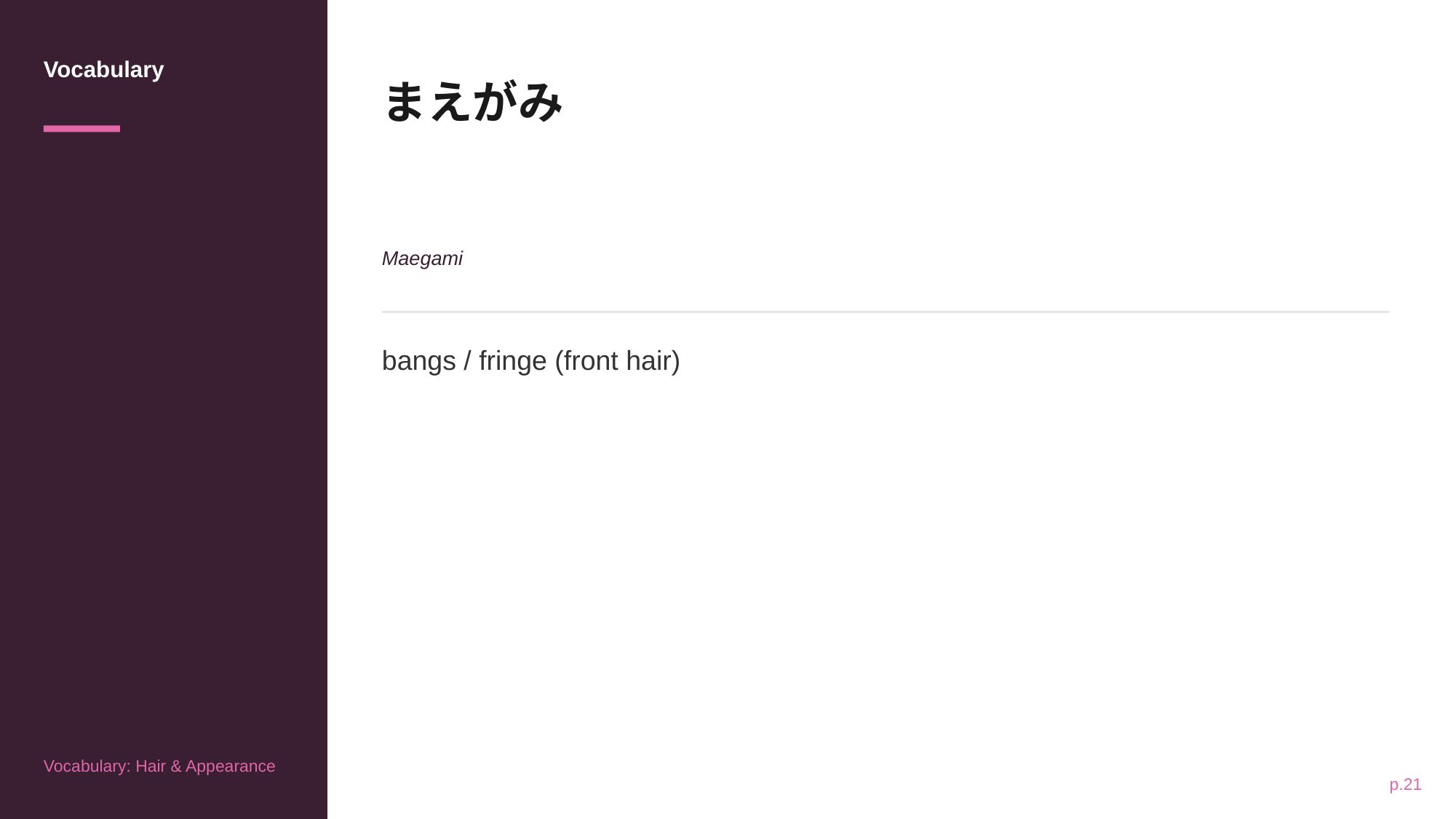
JPまえがみ
EN Maegami
bangs / fringe (front hair)
Vocabulary: Hair & Appearance
p.21
bangs / fringe (front hair)
Vocabulary: Hair & Appearance
p.21
หน้า 27
คลิกเพื่อขยาย
ENVocabulary
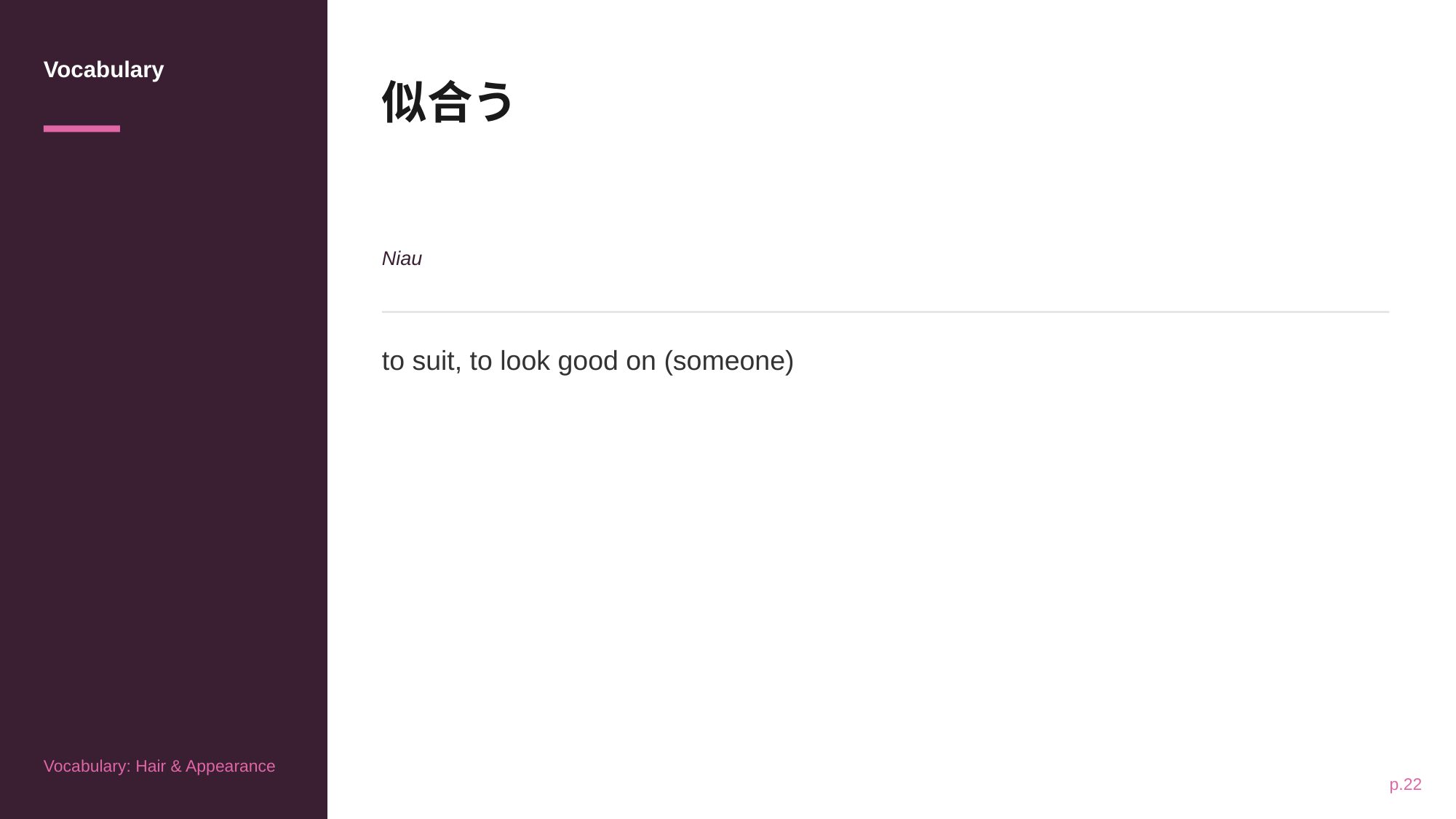
JP似合う
EN Niau
to suit, to look good on (someone)
Vocabulary: Hair & Appearance
p.22
to suit, to look good on (someone)
Vocabulary: Hair & Appearance
p.22
หน้า 28
คลิกเพื่อขยาย
ENVocabulary
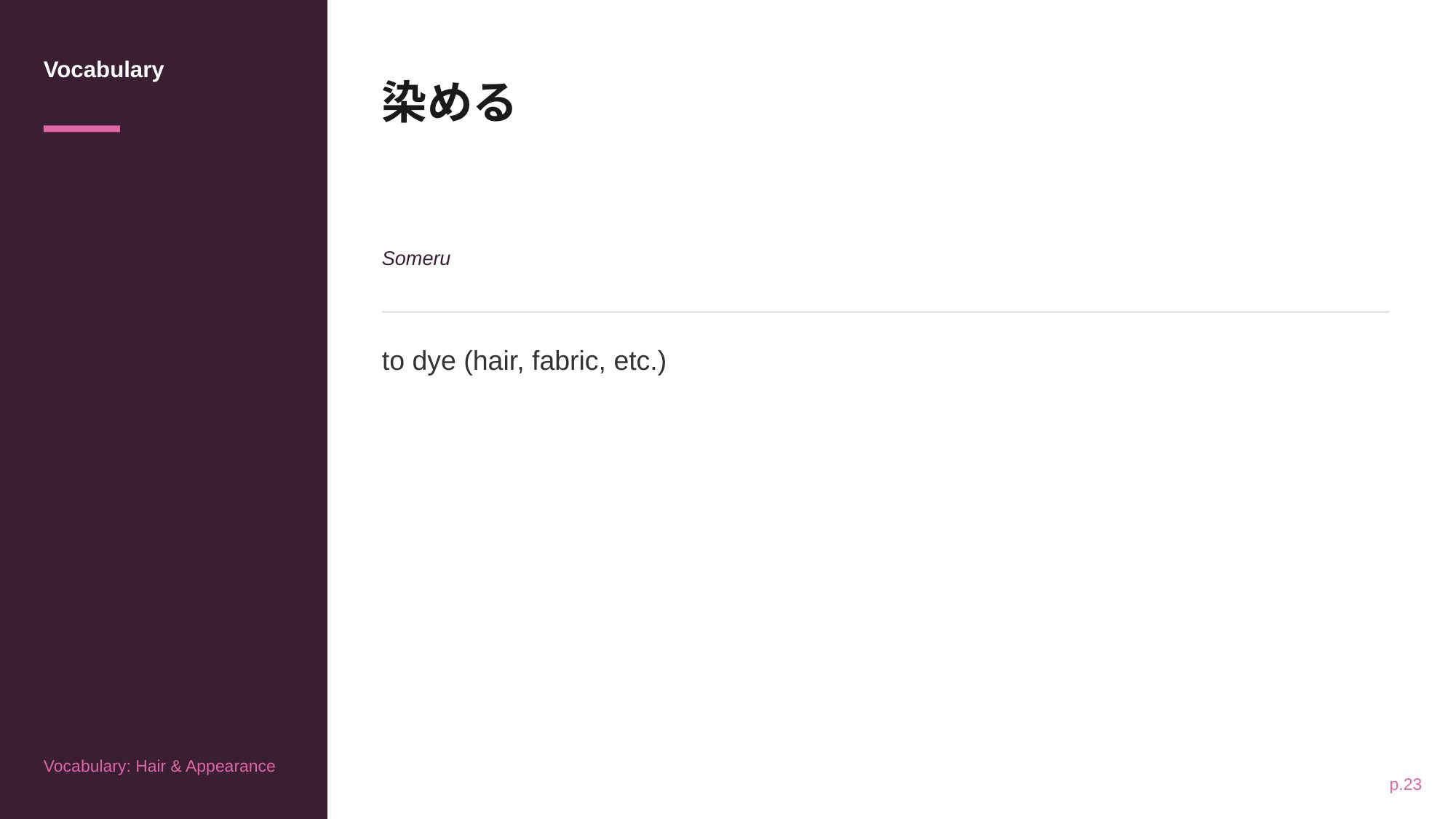
JP染める
EN Someru
to dye (hair, fabric, etc.)
Vocabulary: Hair & Appearance
p.23
to dye (hair, fabric, etc.)
Vocabulary: Hair & Appearance
p.23
หน้า 29
คลิกเพื่อขยาย
ENVocabulary
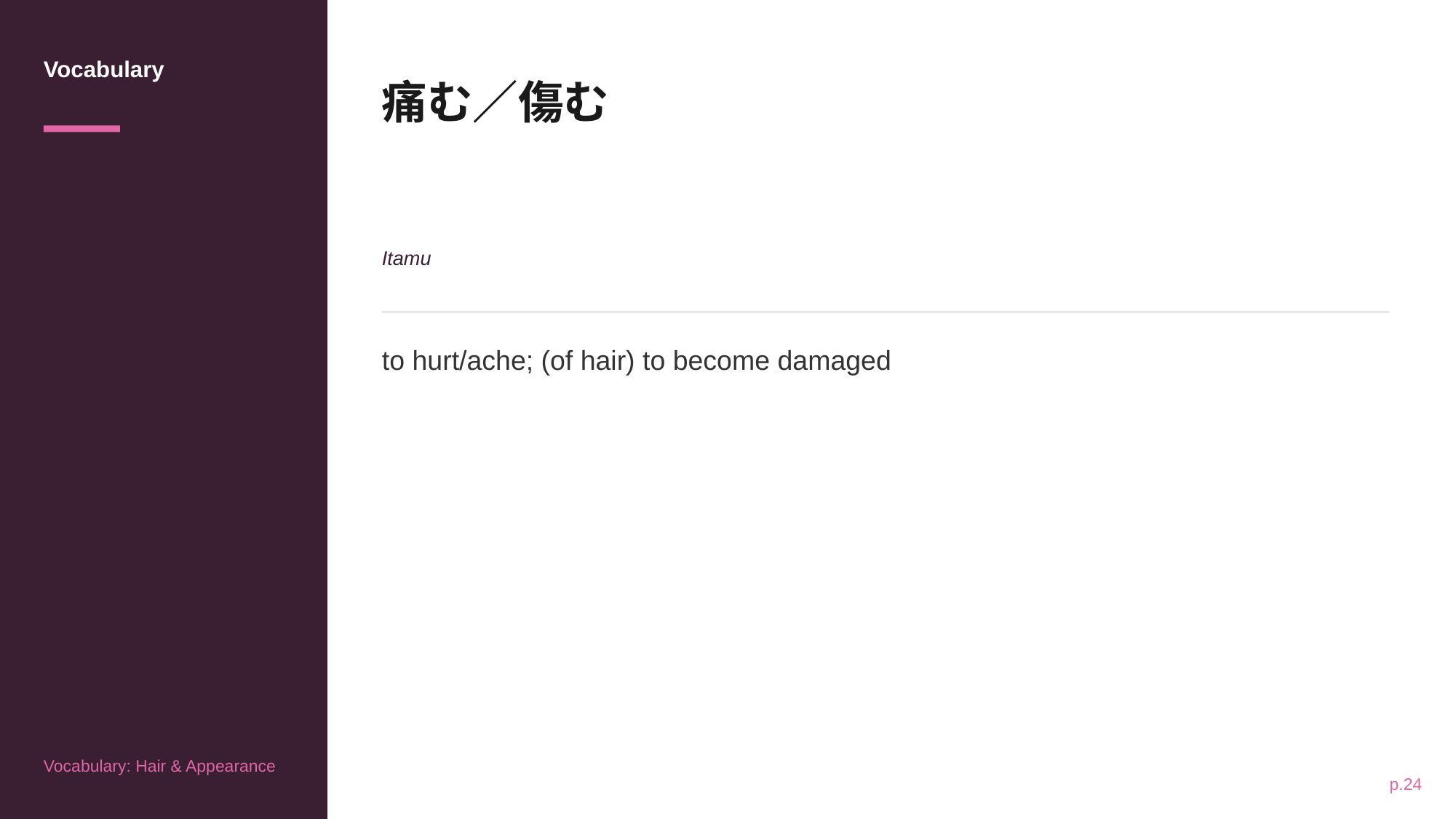
JP痛む/傷む
EN Itamu
to hurt/ache; (of hair) to become damaged
Vocabulary: Hair & Appearance
p.24
to hurt/ache; (of hair) to become damaged
Vocabulary: Hair & Appearance
p.24
หน้า 30
คลิกเพื่อขยาย
ENVocabulary
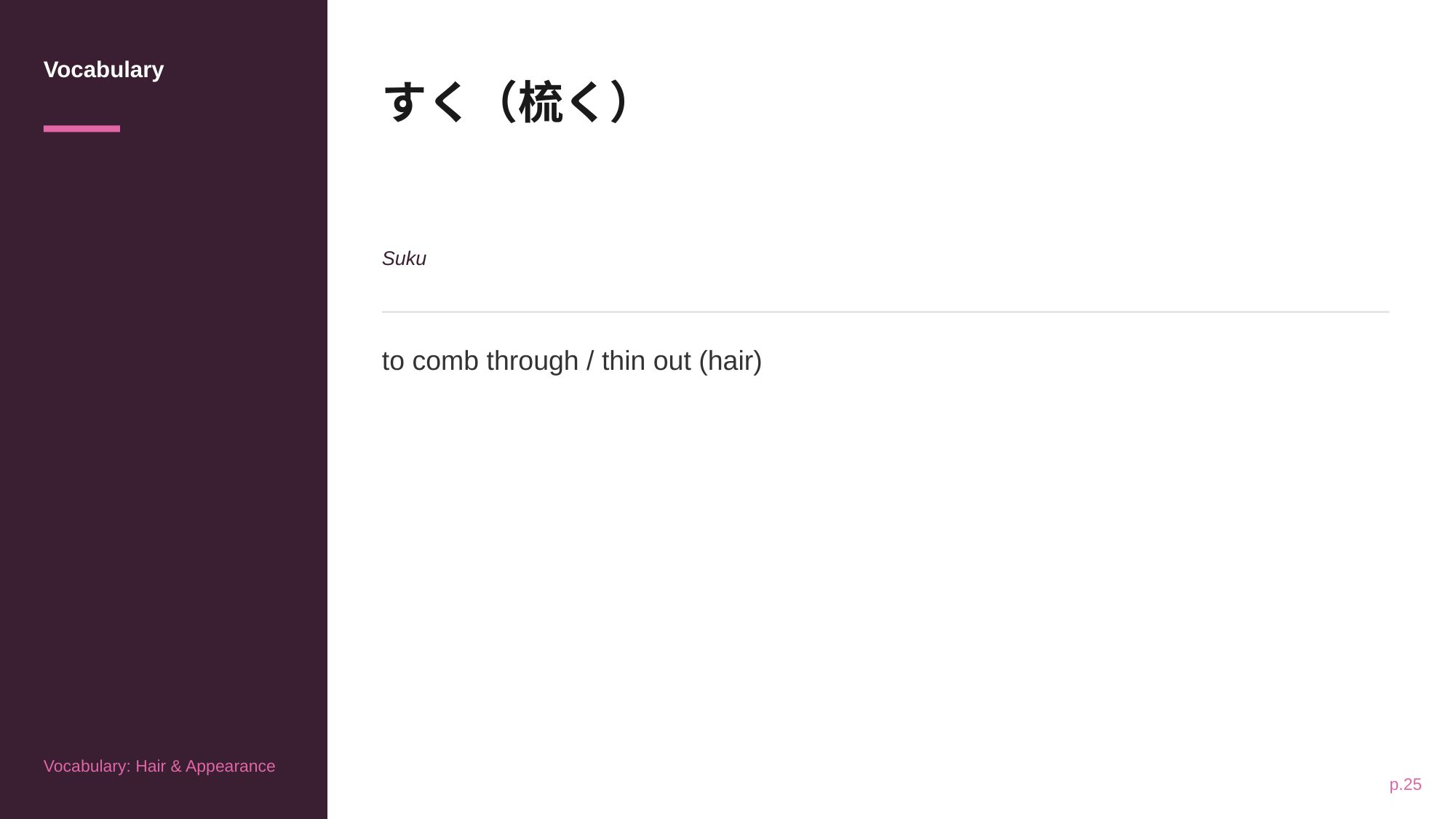
JPすく(梳く)
EN Suku
to comb through / thin out (hair)
Vocabulary: Hair & Appearance
p.25
to comb through / thin out (hair)
Vocabulary: Hair & Appearance
p.25
หน้า 31

คลิกเพื่อขยาย
ENExpressing Emotions
หน้า 32
คลิกเพื่อขยาย
ENFeeling Honored
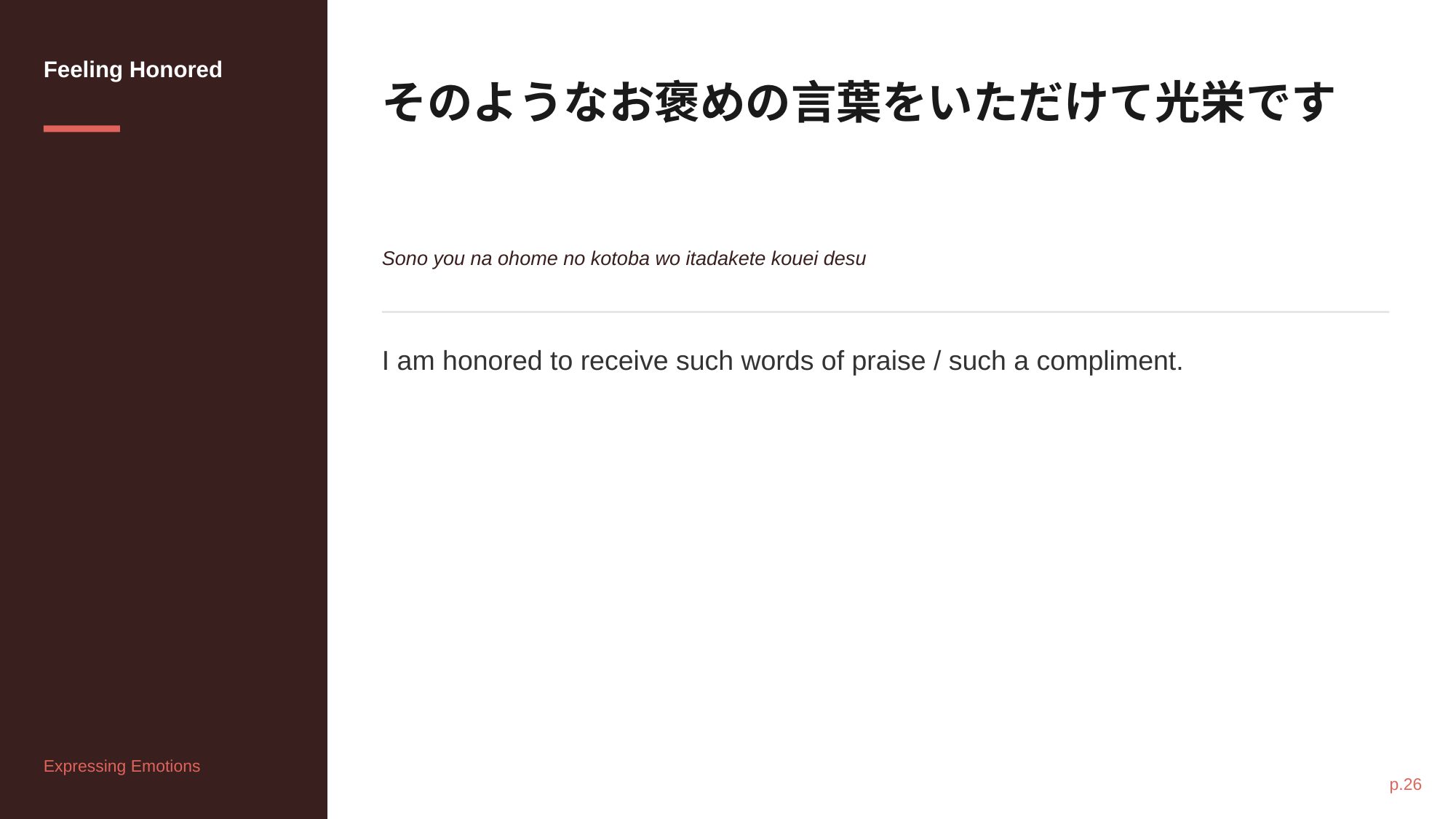
JPそのようなお褒めの言葉をいただけて光栄です
EN Sono you na ohome no kotoba wo itadakete kouei desu
I am honored to receive such words of praise / such a compliment.
Expressing Emotions
p.26
I am honored to receive such words of praise / such a compliment.
Expressing Emotions
p.26
หน้า 33
คลิกเพื่อขยาย
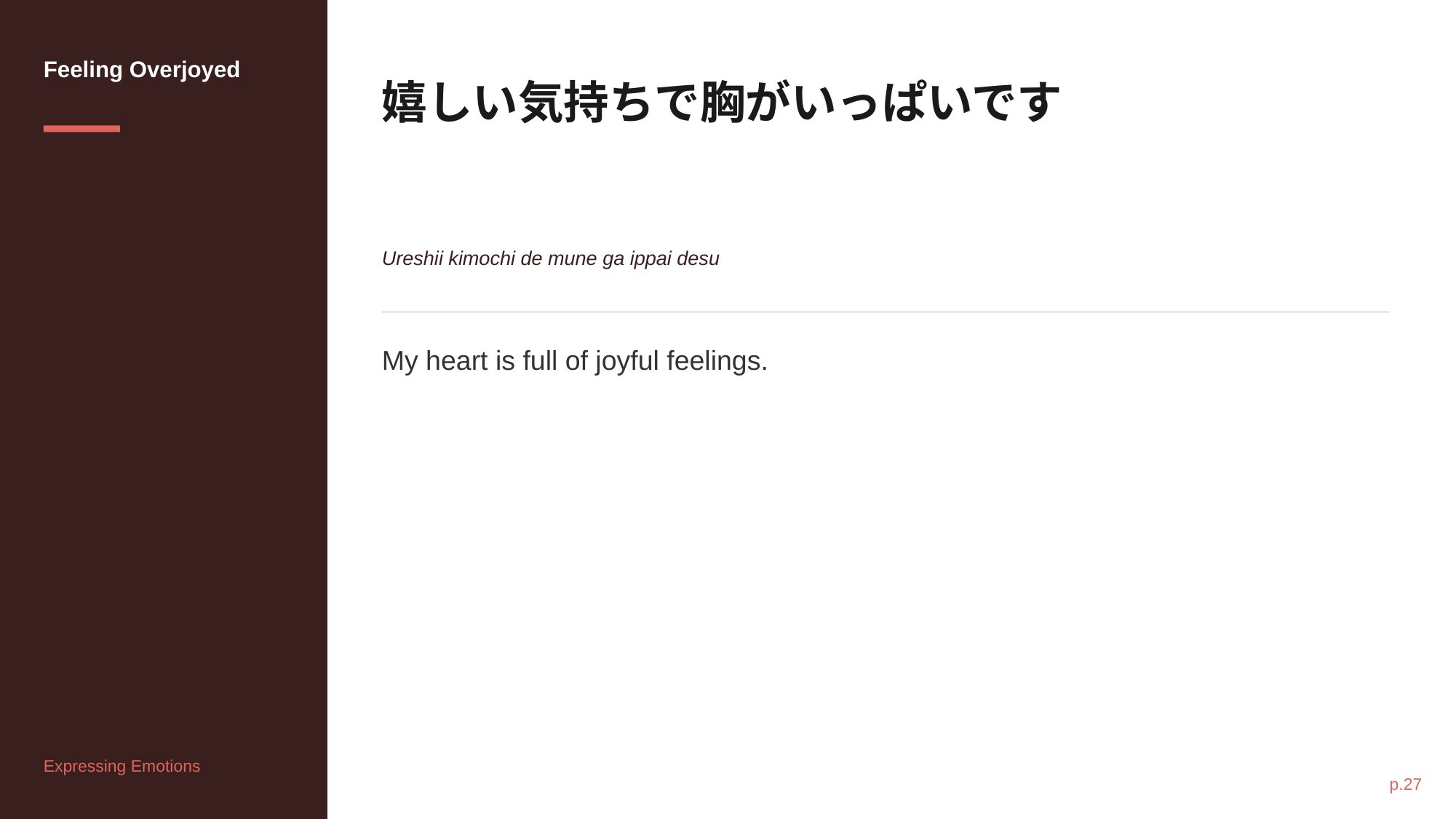
ENFeeling Overjoyed
JP嬉しい気持ちで胸がいっぱいです
EN Ureshii kimochi de mune ga ippai desu
My heart is full of joyful feelings.
Expressing Emotions
p.27
My heart is full of joyful feelings.
Expressing Emotions
p.27
หน้า 34
คลิกเพื่อขยาย
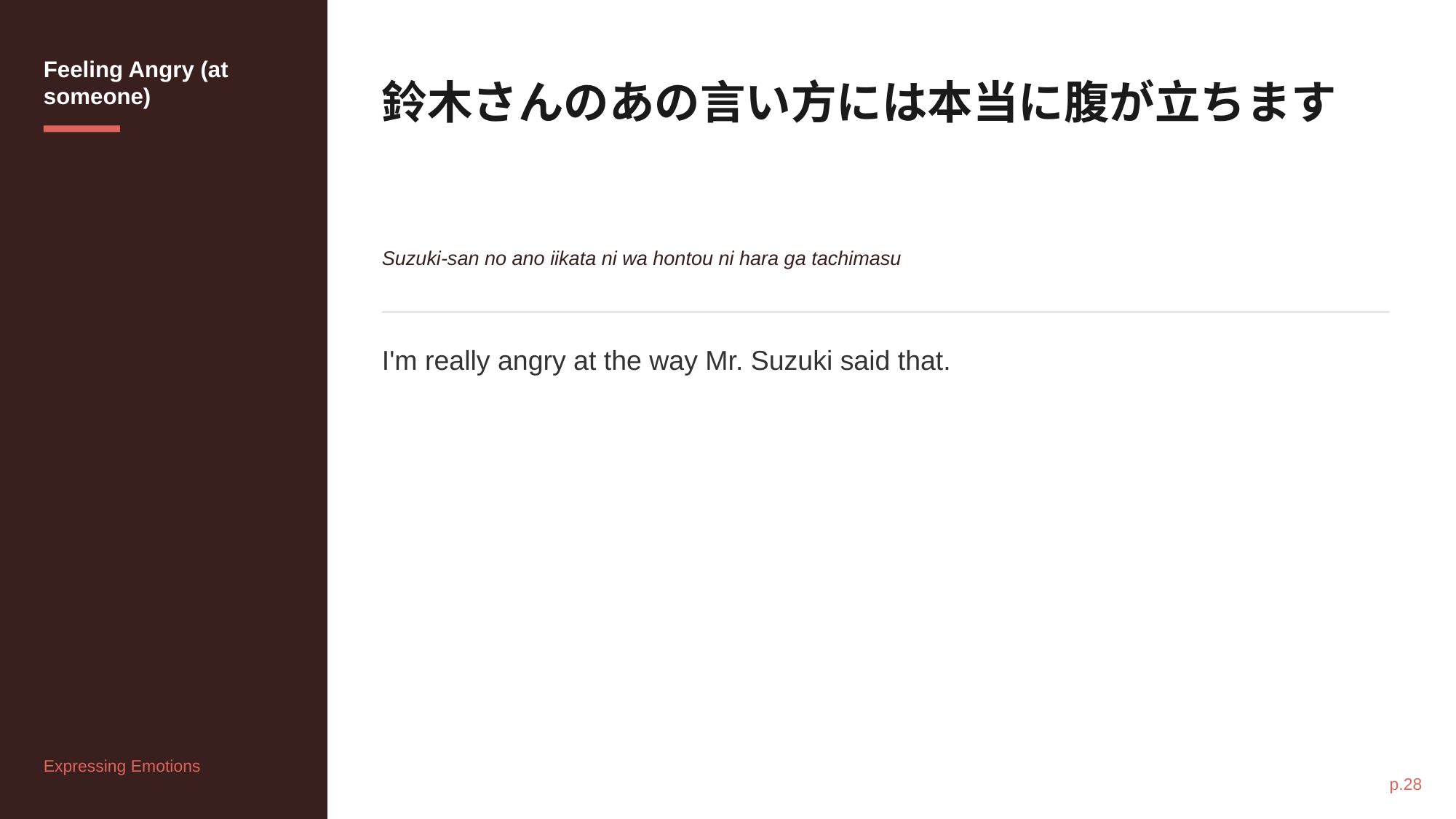
ENFeeling Angry (at
someone)
someone)
JP鈴木さんのあの言い方には本当に腹が立ちます
EN Suzuki-san no ano iikata ni wa hontou ni hara ga tachimasu
I'm really angry at the way Mr. Suzuki said that.
Expressing Emotions
p.28
I'm really angry at the way Mr. Suzuki said that.
Expressing Emotions
p.28
หน้า 35
คลิกเพื่อขยาย
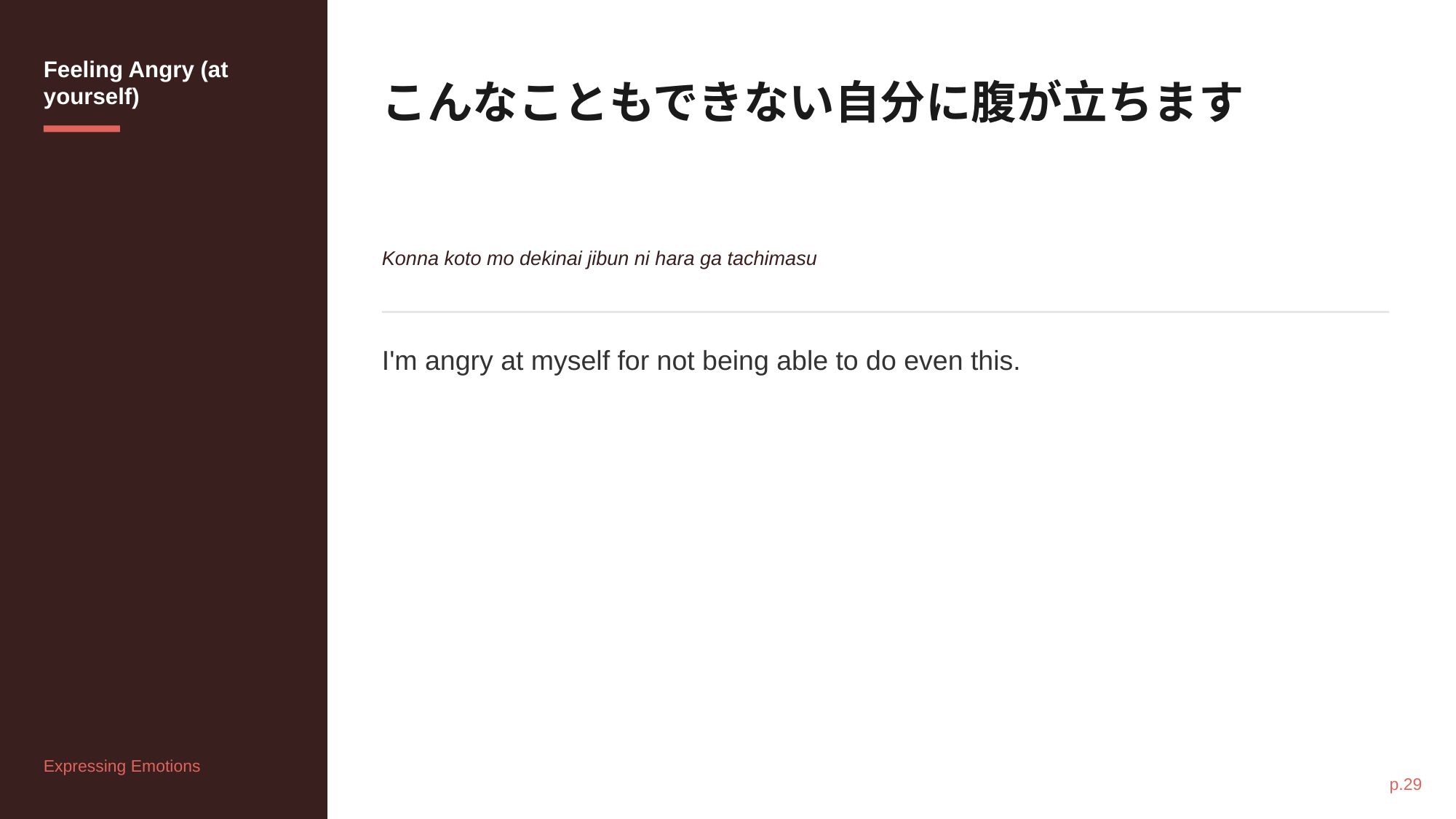
ENFeeling Angry (at
yourself)
yourself)
JPこんなこともできない自分に腹が立ちます
EN Konna koto mo dekinai jibun ni hara ga tachimasu
I'm angry at myself for not being able to do even this.
Expressing Emotions
p.29
I'm angry at myself for not being able to do even this.
Expressing Emotions
p.29
หน้า 36
คลิกเพื่อขยาย
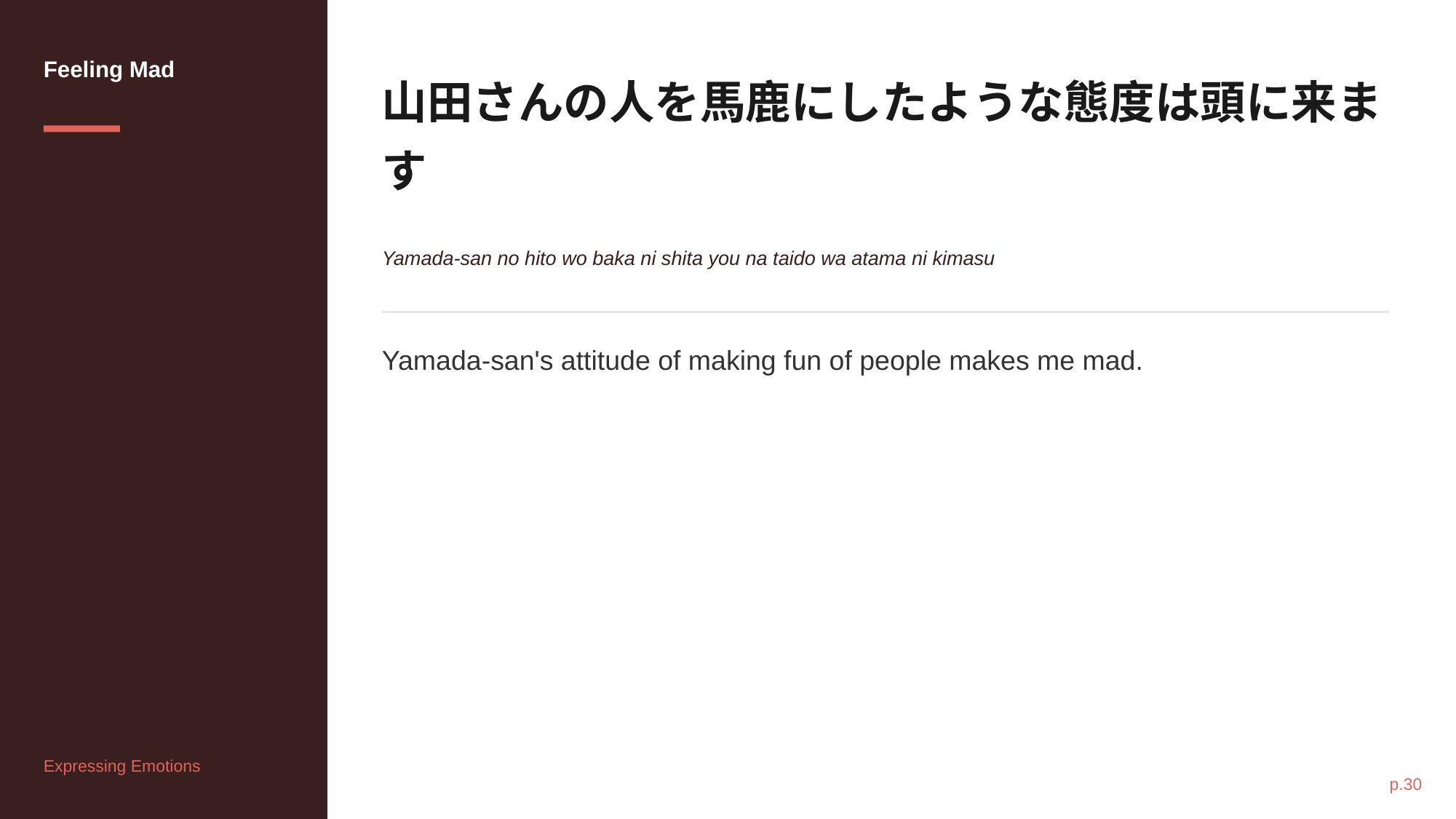
ENFeeling Mad
JP山田さんの人を馬鹿にしたような態度は頭に来ま
す
す
EN Yamada-san no hito wo baka ni shita you na taido wa atama ni kimasu
Yamada-san's attitude of making fun of people makes me mad.
Expressing Emotions
p.30
Yamada-san's attitude of making fun of people makes me mad.
Expressing Emotions
p.30